



Lebanon
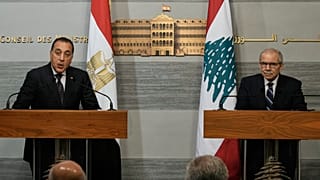
Palestinian President Mahmoud Abbas met with Lebanese officials including Prime Minister Nawaf Salam and Parliament Speaker Nabih Berri as he continued his visit to Beirut. Abbas is on his first visit to Lebanon in seven years.
On Wednesday, the Lebanese and Palestinian presidents agreed that Palestinian factions won't use Lebanon as a launchpad for any attacks against Israel, and to remove weapons that aren't under the authority of the Lebanese state.
Lebanon's government is seeking to establish authority throughout the country, mainly in the south near the border with Israel after the 14-month Israel-Hezbollah war that ended in late November with a U.S.-brokered ceasefire.
The 12 Palestinian refugee camps in Lebanon aren't under the control of the Lebanese state, and Palestinian factions in the camps have different types of weapons.
Rival groups have clashed inside the camps in recent years, inflicting casualties and affecting nearby areas. It wasn't immediately clear how the weapons would be removed from the camps, which are home to tens of thousands of Palestinians, many of them descendants of families that fled to Lebanon after Israel was created in 1948.
Abbas' Fatah movement and the militant Hamas group are the main factions in the camps. Smaller groups, including some jihadi factions, also have a presence in the camps — mainly in Ein el-Hilweh, which is Lebanon's largest Palestinian refugee camp and located near the southern port city of Sidon.



01:56
Eastern DR Congo situation 'catastrophic', says visiting EU commissioner
Go to video
Palestinians wait at West Bank checkpoint to enter Jerusalem for Ramadan prayers
01:35
Khartoum residents mark the first day of Ramadan amid Sudan's war
Go to video
African Union adopts resolution calling slavery and colonialism genocide
01:01
African Union holds summit: is it ignoring the real issues?
02:09
Kagame criticises international "threats" against Rwanda as US sanctions loom