



Democratic Republic Of Congo
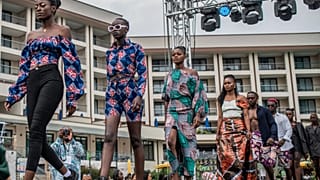
In Kinshasa, the iconic abacost suit is making a strong return, blending political history with modern Congolese fashion.
Popularized in the 1970s by former president Mobutu Sese Seko, the collarless jacket was introduced as a symbol of African identity and a rejection of Western-style suits. Nearly three decades after Mobutu’s fall, the garment is once again in high demand.
At the renowned Okasol atelier, tailor Serge Okasol says dressing well in Congo is about more than appearance.
“Getting dressed in Congo is like putting on armour,” he says. “The latest trend in Kinshasa is the abacost suit.”
The family-run workshop, now led by Serge and his brother Auguy, caters to ministers, diplomats and young professionals seeking custom-made designs featuring African fabrics and embroidery.
Despite growing competition from lower-priced imports from China and India, Auguy Okasol says quality keeps local craftsmanship ahead.
“What saves us is our quality,” he says. “It allows us to stay on course and remain at the top.”
For customers like Percy Loso, the suit is also a statement of identity.
“When you wear traditional fabric, even in Europe, people immediately know you are African, you are Congolese,” he says.
In Kinshasa, where fashion is a source of pride and self-expression, the abacost is proving that style and cultural heritage remain closely intertwined.








02:08
Ebola fears keep pregnant women away from healthcare in eastern DRC
10:00
Ebola DRC: The Deadliest Outbreak in the Country's History [Africanews Today]
01:51
Ebola: Water scarcity hampers control efforts in epicentre
01:00
Brussels unveils giant flower carpet inspired by Hokusai masterpiece
01:01
DR Congo Ebola death toll surpasses 2,000 as scientists trace likely origin
01:00
Bulgaria lights up its Black Sea coast with digital art festival