



Jews
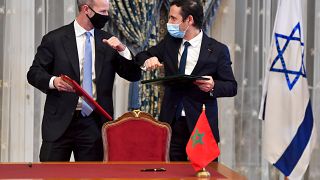
Moroccan Jews may be packing their suitcases to board direct flights to Israel after the kingdom normalised ties in December, in a US brokered deal.
But tickets for regular commercial flights have yet to go on sale due to bureaucratic delays and the coronavirus pandemic.
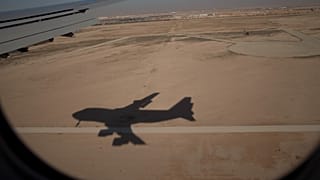
The first direct commercial flight headed from Tel Aviv to Rabat in December after Morocco became the sixth Arab League member to normalise ties with Israel.
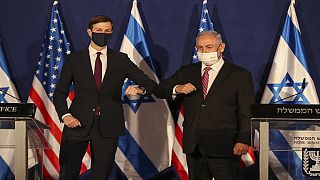
As part of the deal, the US agreed to recognise Morocco's claim over the disputed Western Sahara region.
Many in Casablanca welcome peace and the possible tourism benefits.
"We Moroccan Jews, did not have this possibility in our minds to return, but now it exists. His Majesty paved the way. It is a true revolution but the impact will not be seen until much later when we come out of this pandemic," said Fanny Mergui, a saleswoman.
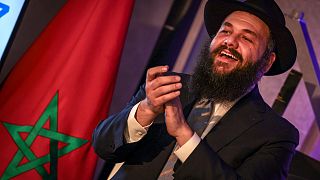
"The Jewish community is very happy and delighted, of course, to be able to have this bridge today, to be connected to this community of almost a million Moroccans abroad, because they have always remained Moroccan," said George Sebat, a Jewish businessman.
Israel had established liaison offices in Morocco in the 1990s.
But they were closed in the early 2000s when relations broke down after the outbreak of the Palestinian uprising.
Yet relations quietly continued, with some $149 million in bilateral trade between 2014-2017, according to Moroccan news reports.
The re-opening of the liaison offices could make it much easier for Moroccans to obtain visas to visit Israel.
Morocco is home to North Africa's biggest Jewish community and the ancestral homeland of some 700,000 Israelis.
It was boosted in the 15th century by Jews expelled from Spain, and by the late 1940s reached some 250,000 people -- around a tenth of the population. But that figure tumbled as many Moroccan Jews headed to the newly founded state of Israel.
"I'm very happy" that the five-hour route will be served by direct flights, said Mergui, a Moroccan Jew who lives in Casablanca.
"It's a true revolution."
But normalisation has not been universally welcomed by Moroccans.
Sion Assidon, an academic and prominent left-wing activist who backs the Boycott, Divestment and Sanctions movement against Israel's treatment of Palestinians, is bitterly opposed.
"The latest fad is to justify the shame of normalisation by citing Morocco's historical links with Moroccan colonists," he wrote on Facebook.
Mergui, a former Zionist youth activist, said she had emigrated to Israel in the 1960s but returned to Morocco after the 1967 Six-Day War.
"I could not accept that the Jewish state, which I believed in, should occupy Palestinian land," she said.
She urged Israel to support "the creation of a Palestinian state".
But, she added, she welcomes "every step towards peace".


01:18
Morocco's King Mohammed VI formally appoints first woman-led government
01:11
Western Sahara: Polisario front challenges UN Envoy as MINURSO mandate vote nears
00:56
Spain seeks ‘good neighbourly relations’ with Morocco as migration crisis shadows royal visit
01:00
Ceuta crowds affirm Spanish identity during royal visit
00:59
Morocco's PAM party forms governing coalition with three other parties
01:00
Ceuta awaits King Felipe after summer migration crisis