


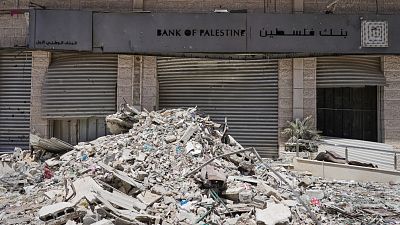

Gaza City
In the war-ravaged Gaza Strip, cash has become a rare and precious commodity — and Gazans are now paying a steep price just to keep it circulating.
With banks shuttered, ATMs out of service, and border crossings closed, physical cash is nearly impossible to come by. Most Palestinians rely on worn, damaged Israeli shekel bills to survive — and those notes are now being patched up by hand to stay in circulation.
"With frequent use, the paper began to deteriorate," says Ihab Hindi, a paper currency repairman in Gaza City. "We try as much as possible to repair it so it can be used in the market, due to the lack of cash."
The work is in demand. Residents like Shadi Al-Jamal visit repairmen multiple times a week just to keep their money usable. "Sellers and stall owners still accept it after repairs," he says.
Yet not everyone does. Jehad al-Sosi, also from Gaza, says even intact notes are now rejected. "They used to object to 10 shekels. Now they refuse 20s and 50s, even when there's nothing wrong with them."
With inflation soaring, unemployment estimated above 80%, and money changers charging up to 40% commission, families are forced to sell belongings just to buy essentials. The cash crisis, worsened by Israeli restrictions and Gaza’s financial collapse, has become yet another layer of hardship for civilians already under siege.
In Gaza today, even broken bills — patched with glue and tape — are more valuable than ever.

00:53
Uganda says August export revenue up 36 per cent on higher gold earnings
02:05
Prized wild pepper at risk in Madagascar's shrinking forests
01:00
Pix of the Day, 19 October, 2026 - Across the world
01:10
Mauritius, Seychelles among most capitalist nations in Africa according to new index
00:42
Two Americans win 2026 Nobel Prize in Economics for stabilisation models
01:16
Fuel shortage persists in Malawi and disrupts daily life