



Spain
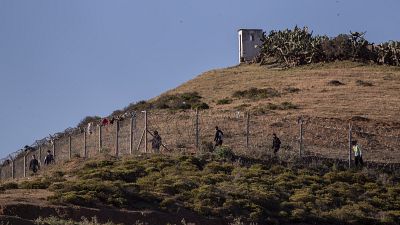
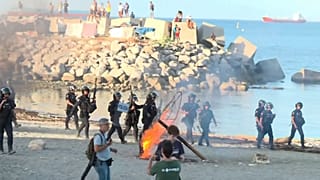
Spanish police shot tear gas toward a group of people gathering near the border between Morocco and Spain's enclave of Ceuta on Wednesday, to prevent them from crossing into the European country.
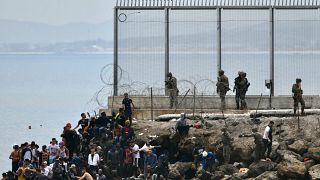
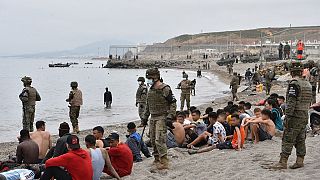
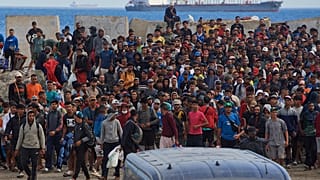
It comes after more than 8,000 people crossed into Spanish territory from Morocco during the previous two days, with many risking their lives by swimming around a breakwater to reach a beach on the European side.
Exhausted by either scaling a double-wide border fence or swimming in the Mediterranean, some migrants spent the night in an overcrowded warehouse under the gaze of the Spanish police.
Spain's Interior Ministry said that it had returned roughly half of the migrants, but there were many unaccompanied minors, which Spanish law says must be taken into care by authorities.
Many shopkeepers kept their stores shuttered, while local schools in the city of 85,000 reported that attendance dropped by 60%.
While Morocco was tightening controls of a border after two days of allowing crossings, Spanish authorities increased their criticism of counterparts in Rabat.
Prime Minister Pedro Sanchez told Spain's Parliament, a day after he visited Ceuta, that the lack of border control was an act of defiance and disrespected not Spain but the European Union.
Foreign Minister Arancha Gonzalez Laya also increased her tone on Wednesday, saying for the first time in public that Spain believes Morocco loosened its border control to retaliate for Spain having given medical assistance to the head of the Western Sahara liberation movement, a disputed territory to Morocco's south.


01:29
Moroccan lawyers extend strike over profession law
01:17
Morocco kicks off legislative election campaign with 27 political parties vying for 395 seats
02:24
Migration: Spanish prime minister defends handling of Ceuta crisis
01:46
Spanish PM defends handling of Ceuta crisis, refuses to pin Morocco
01:43
Ceuta: Moroccan migrants stranded on El Trampolin beach
01:29
Madrid pledges €306 million in additional aid for Ceuta