



Human Rights
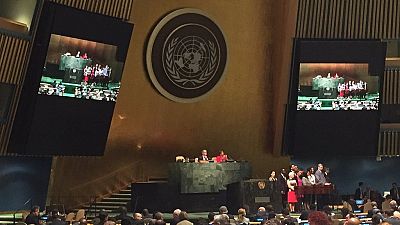
Four African countries have been voted by the United Nations General Assembly to serve on the UN’s human rights body. Africa had the highest continental representation on the fourteen member board.
The four countries comprised of two northern African countries – Egypt and Tunisia, with the other two being in the sub Saharan Africa region – Rwanda and South Africa.
Egypt has been accused of rights abuses in the recent past including the barring of non governmental organizations. Rwanda’s human rights record has also been lambasted by Human Rights Watch for ‘Locking up The Poor.’
South Africa’s decision to withdraw from the International Criminal Court (ICC) has raised issues about the commitment of the government relative to protecting rights of victims of injustice. Tunisia is seen as returning to stability after an authoritarian rule that ended in an Arab spring but rights issues are also rife in the country.
Countries elected to #UNHRC: RSA, Egypt, Tunisia, Rwanda, Croatia, Hungary, Brazil, Cuba, China, Saudi Arabia, Japan, Iraq, UK, US #sabcnews
— Sherwin Bryce-Pease (@sherwiebp) October 28, 2016
An opinion editorial by the Human Rights Foundation (HRF), a non-profit rights protection group said all four African representatives were not fit to serve on the commission for one reason or the other.
‘‘Tunisia (a state transitioning from authoritarianism to democracy) and the democracies of Guatemala and South Africa (with questionable voting records at the U.N.) are questionable candidates, while the authoritarian regimes of China, Cuba, Egypt, Iraq, Malaysia, Russia, Rwanda, and Saudi Arabia are clearly unqualified candidates,’‘ the writer said.
European countries included Croatia, Hungary and the United Kingdom. Cuba, Brazil and the United States represent the America region. China, Saudi Arabia, Japan and Iraq complete the list from the Asia region.
The UN Human Rights Commission (UNHRC) is the organization’s main body tasked with protecting and promoting human rights globally. The body was established in 2006.
They have the authority to appoint U.N. special procedures (working groups, independent experts, special rapporteurs, etc.), to assess the human-rights situation among the 193 member states of the U.N. through its Universal Periodic Review, and receive individual complaints.
The UNHRC was created to replace the Human Rights Commission, a body established in 1946, which was disbanded after it infamously elected Muammar Gaddafi as president in 2003.

02:20
South African circus gives young performers a new route forward
01:56
South Africa: Olifantsfontein residents hold vigil for woman found dead
01:00
Egypt / China: Top officials meet in Beijing on Friday
01:00
Torrential rain and flooding slam Tunis, forcing schools to close
02:01
Johannesburg’s waste crisis leaves communities surrounded by illegal dumps
01:51
Threatened by floods, South Sudan Unity state hopes for help from UN