



Kenya
African and Commonwealth nations called Tuesday for a swift implementation of a landmark treaty protecting the high seas, warning that despite record commitments to marine conservation, much of the world’s ocean protection still exists only on paper. The call to action was issued at the 11th Our Ocean Conference in Kenya's coastal city of Mombasa.
This was the first time an African nation has hosted the major annual event that focuses on addressing critical ocean issues, including climate change, biodiversity and pollution. Hundreds of delegates from Africa, the United States, the European Union, and climate-vulnerable Caribbean and Pacific island nations took part in the conference, where leaders sought to position Africa as a driving force in global ocean governance.
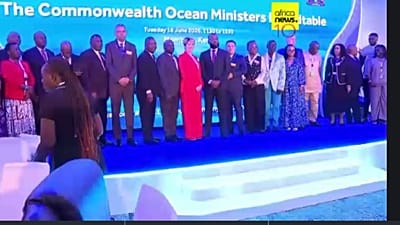
In his opening remarks at the Commonwealth Ocean Ministers’ Roundtable, U.S. Secretary of State John Kerry praised the High Seas Treaty, which came into effect in January 2026, as a historic turning point for establishing a legal mechanism to introduce protected areas in international waters. But he warned that progress remained too slow. “We have 10% of the ocean under protection this year,” Kerry said. “That is worth marking.
But only 3% is highly or fully protected, and the rest of the protections are, unfortunately, just lines on a map.” The treaty, formally known as the Agreement on Biodiversity Beyond National Jurisdiction, aims to help countries achieve a global target of protecting 30% of the world’s land and oceans by 2030. The Kenyan Cabinet secretary of maritime affairs, Hassan Joho, urged governments to shift from promises to tangible actions. “The purpose of this roundtable is not to restate ambition, but to convert such pledges into measurable results for our communities, our economies and our oceans,” Joho said.
The Commonwealth’s 56 member states collectively account for 36% of the world’s ocean jurisdiction and nearly half of its coral reefs, giving the bloc a unique responsibility in protecting marine resources. As negotiations continue in Mombasa, delegates say the coming months will be critical in determining whether the new treaty becomes a transformative tool for ocean conservation or another set of international promises that fail to materialize.

01:00
Albania: thousands rally on 12th day of protests against Trump-linked resort
02:04
Environmental concerns over Nigeria's $11 billion coastal highway
01:00
Albania: Fourth day of unrest as Trump-linked resort sparks protests
Go to video
Congo’s forests under strain from overlapping land use
02:23
Community forest in Eastern DR Congo tests promise of local control amid conflict
01:11
Kenya starvation cult leader charged in connection with 52 further deaths