



Mexico
The violence that followed the killing of a cartel leader in Mexico is fueling fears that the bloodshed could hurt tourism ahead of the FIFA World Cup later this year.
Guadalajara is slated to be one of Mexico's host cities for the competition.
It was one of many places in Mexico that was marked by violence over the past few days.
Jalisco, in western Mexico, was already facing scrutiny. The state has been plagued by some of the starkest examples of cartel violence in recent years, including the discovery of a cartel killing site at a ranch last March and a crisis of disappearances.
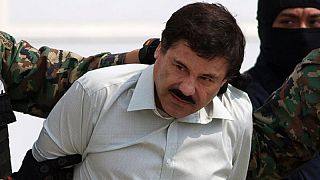
The state, with Guadalajara as its capital, is the central hub for the Jalisco New Generation Cartel, whose leader Nemesio Oseguera Cervantes, or “El Mencho,” was killed Sunday in a capture attempt by the military.
The operation and waves of violence killed 70 people.
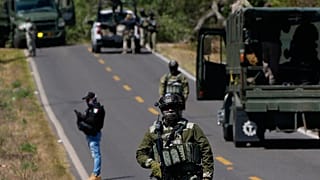
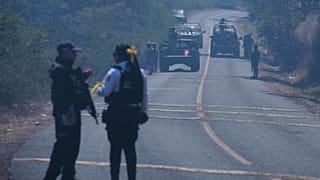
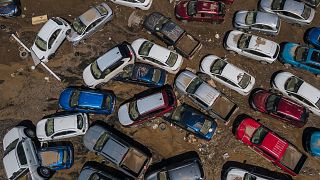
Cartel gunmen set fire to cars to block streets in states across the country, namely Jalisco, and fought with Mexican forces into Monday as the government said the conflict was under control.
Mexican President Claudia Sheinbaum has assured people that there's no risk for visitors coming to Mexico for the competition and that the violence will not affect World Cup festivities.
Guadalajara is set to host four World Cup matches, starting on June 11 with Korea facing the winner of the UEFA Play-offs path D.
Ángel Eduardo De La Rosa was working at his store a few miles from a stadium slated to host FIFA World Cup games when police told him to shut up shop because cars and trucks were being burned by cartel members on Monday.
"Things could get ugly, so we closed up and went home to stay safe,” he recalled.
De La Rosa is among a number of people wondering if Guadalajara's capacity to be a host city for the summer soccer competition even as the Mexican government vows that the summer event — hosted jointly by Mexico, the United States and Canada — won’t be affected by recent violence.
'Tourists won't want to come'
Jalisco state been plagued by some of the starkest examples of cartel violence in recent years, including the discovery of a cartel killing site at a ranch last March and a crisis of disappearances.
The state, with Guadalajara as its capital, is the central hub for the Jalisco New Generation Cartel, whose leader Nemesio Oseguera Cervantes, or “El Mencho,” was killed Sunday in a capture attempt by the military.
The operation and waves of violence killed 70 people.
Cartel gunmen set fire to cars to block streets in states across the country, namely Jalisco, and fought with Mexican forces into Monday as the government said the conflict was under control.
"I think it will affect us, because tourists won't want to come," De La Rosa said of the recent violence.
"I think they will be afraid, they will panic and won't want to come here, and it may affect us a bit, because we have high expectations for the World Cup, that sales will be good, and the market will be good, but with these issues, who knows.”
Jalisco Governor Jesús Pablo Lemus rejected the idea FIFA, world soccer's governing body, would remove Guadalajara from its list of cities set to host matches in a few months time.
"FIFA has absolutely no intention of removing any venues from Mexico. The three venues remain completely unchanged,” Lemus said Tuesday.
The death of Oseguera Cervantes came as Mexico’s government has stepped up its offensive against cartels in an effort to meet demands by US President Donald Trump to crack down on criminal groups.
The cartel, also known as CJNG, is one of the fastest-growing criminal networks in Mexico.
The root of concern for many is that taking out of “El Mencho” could pave the way for more violence because it can push rival cartels to make territorial grabs.
Vanda Felbab-Brown, an academic at the Brookings Institution, said she doesn't see more acts of “revenge” by the cartel as likely, but the future remains uncertain, especially as both CJNG and the Sinaloa Cartel have seen their leading figures knocked out in recent years.
Despite that, Guadalajara was snapping back to it’s normal rhythm on Tuesday.
Many businesses opened their doors for the first time in two days, and streets that were once empty were packed with traffic.



Go to video
U.S. Embassy in Ghana opens over 1,000 new visa Interview slots
01:09
N'Golo Kanté completes move to Turkey's Fenerbahce
01:00
Fifa pass launches to help fans travel to US for 2026 World Cup
02:12
Trump travel ban on African countries leaves football fans in limbo for World Cup
Go to video
Trump's travel ban on African countries puts World Cup dreams in jeopardy
Go to video
Nigeria: NDLEA arrests suspected drug kingpin at Lagos Airport