



Morocco
The decision to move the Africa Cup of Nations to a four-year cycle instead of every two years has not been well-received by coaches at the tournament.
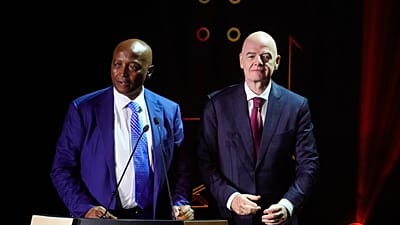
CAF president Patrice Motsepe surprised many observers on December 20 by announcing that the competition, traditionally held every two years, will switch from 2028 to a schedule aligned with FIFA’s calendar.
Some see colonial undertones in the decision and believe it was taken to satisfy European interests at the expense of Africa’s own.
“Since the first tournament in 1957, Africa has had its Cup of Nations every two years,” said Mali head coach Tom Saintfiet. “We must respect Africa. It cannot be Europe – the big clubs, FIFA, UEFA – deciding what we should do.”
Lack of respect
His Egyptian counterpart, Hossam Hassan, criticised CAF for failing to defend the African position and questioned who really benefits from the change.
“It seems designed for African players based in Europe whose clubs don’t want to release them for their national teams,” he said. “So what have they really worked on? They’ve worked on making sure the Africa Cup of Nations is no longer played every two years.”
Hassan added that he felt African competitions were being adapted to “European conditions and in the service of European teams”.
“FIFA often talks about respect. That respect must apply to everyone, to all national teams around the world,” he said. “It is essential to respect African football, including the conditions of players, fans and national teams.”
“Positive impact”
Morocco head coach Walid Regragui took a more measured view, focusing on the impact of the decision on African football and saying it came with “both positives and negatives”.
He pointed to the difficulties many teams face in securing the release of their players from European clubs, suggesting African players are undervalued because they leave every two years.
“There could be a positive effect. The fact that European clubs now know an African player will only play in the Africa Cup of Nations every four years may encourage them to pay them better, as they deserve. And perhaps they will trust them more, knowing they are less likely to lose them during the tournament,” said Regragui, who believes the Africa Cup of Nations is “as strong as the Euros”.
“An AFCON every four years will inevitably become a major event that no one will want to miss. There are interests everywhere. My interest is seeing African football grow,” he added.
African Nations League
None of the coaches appeared convinced by the idea of a new African Nations League, which Motsepe presented as an equivalent of having an Africa Cup every year. There will also be no Nations League in World Cup years.
Motsepe was joined at the announcement by FIFA secretary general Mattias Grafström, who referred to the scheduling problems of the current Africa Cup of Nations, which was moved from the summer to avoid clashing with FIFA’s revamped Club World Cup.
Scheduling the continent’s main international tournament has long been a recurring issue. The current edition was originally due to be hosted by Guinea, but the West African country lost hosting rights in 2022 after CAF judged it would not have the required infrastructure and facilities. Since 2013, every Africa Cup of Nations has been relocated because of problems with the original host country.
French coach Claude Le Roy, who led Cameroon to the title in 1988 and later coached Senegal, DR Congo and Ghana, stressed the developmental benefits of a biennial Africa Cup.
“This decision is not for Africa at all,” he said. “It is for FIFA.”
![Cameroon edge South Africa, to face Morocco next [Football Now]](https://images.euronews.com/articles/stories/09/60/20/79/320x180_cmsv2_a3fd7a8c-e501-5ddb-b541-81fa9828e988-9602079.jpg)



00:57
FIFA’s World Cup trophy replica returns to Algeria after 12 years
01:17
Moroccan football federation to appeal CAF sanctions imposed after AFCON final
00:51
Ademola Lookman to leave Atalanta, joins Atlético Madrid
01:17
Senegal's football federation says it will not appeal CAF sanctions
01:44
Football tournament in Zimbabwe spreads awareness of cervical cancer
01:12
Senegal says it will appeal CAF sanctions imposed after AFCON final chaos