



Interview
''That's where I come from. I come from the depths and the silence. Funds have become kings since reason was confined to psychiatry.
Where art is desecrated when it is feminine, where the dollar civilizes with weapons and the weakest man is content to drown in the river of their tears.''
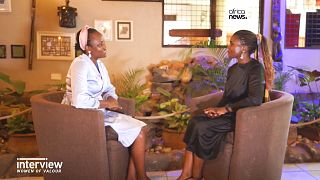
These are the words penned and spoken by poet Esther Abumba, a resident of the war-torn Democratic Republic of Congo. Aged 23, Esther has chosen slam as her tool to transform pain and injustice into a message of hope.
''I chose slam because for me, slam is about more than words. For me and for all the other people who do slam, maybe. Slam is direct. It's a movement. In fact, it's a tool that enables us to fight every day, living in a community marked by conflict. in a community marked by conflict. Slam allows us to express, to heal ourselves personally,'' she says.
Describing the art form as a form of therapy, Esther says many of her fellow slam poets write about the theme of conflict.
''Often they're ten, eleven or fourteen years old. But strangely enough, they've only written about war, conflict, violence against women and injustice,'' she says.
''So I think young people need platforms, they need space to express themselves, and above all they need to use a very good instrument to fight injustice. And that's where the role of the slam comes into play, breaking down injustice through words.''
The poet hopes that through her work, she can help to change certain narratives surrounding women in the country. She's calling on other women to do the same.
''I believe in the power of change through women. I believe that women have this capacity to influence and change the narrative after 30 years or during these 30 years of wars. The story of the Congolese women or the women in general which was told to you in a negative way,'' she states.
The poet insists that ''it's time for the women who have these powers, who are lucky enough to live in very good conditions, to make an effort to rewrite the history of the women of Kivu, because she must not only be the one who is raped, violated, sad, despised and discriminated against. She must also be a woman who rises up, who rebels, who rises from her ashes.''





01:02
Civil society groups warn against Congo referendum
11:19
Decoding Nigeria’s crypto shift and transforming diaspora cash into capital {Business Africa}
02:05
DR Congo's largest Ebola treatment centre set to open in Bunia
01:35
DR Congo: Opposition fury as Tshisekedi edges closer to third term
01:36
Bodies recovered after deadly attack in Eastern Congo
01:15
Ebola outbreak: UN projects $3.6 billion cost for Africa in worst case