



Morocco
Morocco’s Drâa Tafilalet region in the Atlas mountains is at the centre of the country’s date cultivation. This year, farmers are hoping for a bumper crop.
In Erfoud, along the banks of the Ziz river, this year’s date harvest has already exceeded 100,000 tons.
Mild summer temperatures combined with last year’s rainfall have helped ripen the dates and improve their quality.
Now, they’re ready to go to market.
"In September, the market is full of dates, and thank God, production has been good," says one farmer. "Regarding the harvest, you have to shake the palm trees well to make the dates fall. You have to be careful and make your way out of the palm grove after you're done."
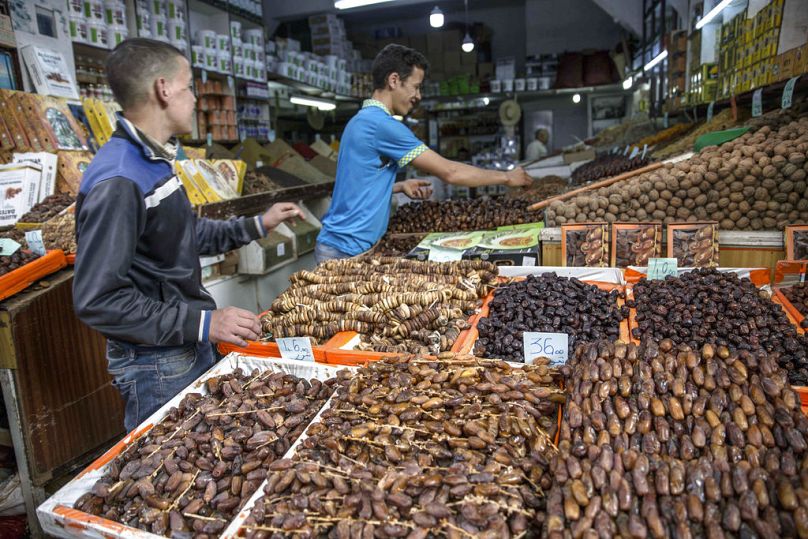
Harvesting intensifies as the dates change from green to golden yellow, dark red or light brown. Farmers pick the dates by hand, using scissors and sickels. It's a delicate process that demands experience to preserve the safety of workers and maintain the integrity of the date clusters.
"From 8 a.m. until late afternoon, we're busy harvesting dates," says another farmer. "There's a wide variety of dates: Majhoul, Boufgouss, Lkhalq, and Bouslikh. We used three mats on which we place the dates to sort and prepare them. We also carry out a process called “ta'maar,” which consists of putting the dates in a container for further processing."
Date markets have been lively since the start of the season, with strong demand from customers and traders seeking the best quality at competitive prices.







01:43
Moroccan voters call for action after election results
02:19
Tangier’s annual art night brings the city’s creative spirit to life
01:06
Ceuta migrant crisis: 28 undocumented migrants found hidden in Spanish flats
01:09
Morocco’s PAM leads parliamentary election with turnout at two-decade low
02:00
Morocco’s opposition leader casts vote in parliamentary election
01:08
Morocco votes in parliamentary election amid youth discontent