



Gaza
Bodybuilding has long been a popular sport in the Gaza Strip – among men – but before the ongoing war, also a tiny but growing number of women.
While Israeli travel restrictions and other obstacles as a result of its blockade made competing abroad difficult, it remained one of the few accessible sports.
Now, 22 months into Israel’s relentless bombardment of the Palestinian enclave, athletes are struggling to keep up their form.
The United Nations has warned of “catastrophic hunger” in Gaza saying one in every three people has not eaten for days.
Amid this severe lack of food, maintaining the muscle mass to workout on their makeshift bodybuilding equipment has become an act of survival and resistance.
A young athlete in a so-called “safe zone” in southern Gaza told al Jazeera he only manages to train only once or twice a week now, and for far less time.
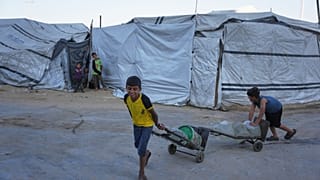
His “gym” is a makeshift facility in a tent in a al-Mawasi, which is now home to about one million displaced people living in overcrowded and unsanitary conditions.
In this refugee camp, a coach has created what one might call a sanctuary, using equipment salvaged from his destroyed facility in Khan Younis.
The former international powerlifting champion says he has adapted his training methods to the famine conditions, instructing athletes to minimise workouts and avoid overexertion.
Despite this, he says that on a daily basis some experience complications including fainting and the inability to move.
With dreams of taking part in competitions - local or otherwise – shattered, the athletes keep working out as they hope for an end to the war and a chance to compete again.


01:08
Race to rescue survivors trapped under rubble after twin quakes in Venezuela
01:07
UN adopts resolution upholding accountability for attacks on peacekeepers
01:14
Libya's eastern government bans entry for nationals of four countries
01:57
UN warns of worsening Ebola outbreak and El Niño-driven hunger threat
01:07
US advisor expresses 'cautious optimism' on Libya after talks with Egyptian FM
01:35
Top UN official visits refugee inclusion project in Ethiopia