



South Africa
Loud sobs drowned out dirges sounding from speakers as a flower-covered coffin arrived for a funeral service in a South African township where locals of Indian descent clashed with black counterparts during recent riots.
The coffin carried the remains of Njabulo Dlamini, a 31-year-old father of 11 who was killed in the adjacent town of Phoenix on July 12, allegedly by a group of South African Indian residents manning a roadblock.
Wearing an elegant black dress and sequin-lined hat, his sister Linda Dlamini said the black taxi driver was shot dead in Phoenix by "Indians" standing guard against looters.
Dlamini was intercepted by vigilantes while accompanying friends on an errand in Phoenix, his sister said.
"They started beating him harder and harder. He woke up and ran. When he was trying to run - because he noticed that he was being attacked - he was shot in the head and then he fell," Linda Dlamini said.
"After that they continue to beat him, beat him, beat him, beat him, beat him. He’s got so many scars even on the head."
By the time police intervened, the attackers were preparing to set Dlamini and another severely injured friend on fire.
The pair were rushed to hospital where Dlamini was pronounced dead.
His siblings struggled to recover the body, barred by armed groups patrolling roads into the town.
"They had axes in their hands and told us to go back," Dlamini said.
"It is a racist thing," she cried, anger flashing in her reddened eyes.
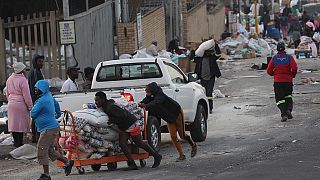
Like communities in parts of the country hit by the unrest, residents of the predominantly ethnic Indian town set up their own protection squads in response to pillaging and arson that broke out days after the jailing of ex-president Jacob Zuma on July 8, overwhelming security forces.
Some of these grassroots mobilisations turned violent and, in Phoenix, they led to allegations of racism.
A dozen black religious leaders marched to the Phoenix police station. They prayed for peace and called for vigilantes to be brought to justice.
"It has turned into an element of racism, though it did not start like that. But if we don't stop it now it's going to exacerbate as racism, and that is what we do not want to see happening here. If we don't stand up, and keep quiet, yes you're going to see racism coming up in a very serious way," Pastor Vusi Dube told reporters.
"You must remember that the Indian and the African people, we have always lived together for a very long time. There's no need for us to be fighting," he added.
Pastor Vusi Dube said that only arrests would "quench the anger of the people".
Standing guard
While unrest has largely eased, armed citizens have continued to watch over their property and families late into the night.
Videos on Social media showed some members of the Indian South African communities standing vigil, and sometimes opening fire on against alleged rioters.
But this footage isn't representative of the whole community, Karim, a member of the Phoenix community policing forum, says.
"I mean we've got thugs in the Indian community, we've got thugs in the African community. No matter how much you speak to these thugs they will not listen to you, and, yes, we don't condone these acts. The ones that actually murdered, the ones that torched vehicles, need to be brought to book," he said.
But he vehemently denied stoking racial tensions, noting that the majority of self-protection groups have operated peacefully.
"Justice needs to take place, but you cannot brand all Indians are racist."
20 people from nearby townships were reportedly murdered in Phoenix since the outbreak of unrest in the KwaZulu-Natal province.





01:47
Ramaphosa urges regional countries to tackle irregular migration
01:05
Thousands pay tribute to former Cambridge prof Jason Arday at London vigil
01:36
Tributes pour in for Jason Arday after his sudden death
01:08
South Africa seeks reimbursement from African countries for migrant repatriations
01:08
South Africa hit by icy blast as snow blankets several provinces
00:52
14 clandestine miners killed in disused South Africa mine