



IMF
The International Monetary Fund has reached an agreement with Senegal on a new $2.2 billion debt programme, after a prior deal was suspended following discovery of previously unreported debt.
The 36-month arrangement is meant to support the country's "economic and financial reform program for the 2026–2029 period."
But given past underreporting it will also require "decisive corrective measures to support the authorities' request for a waiver regarding the misreporting of data," the IMF said in a statement.
The staff-level agreement will still need to be approved by the IMF's executive board.
In 2024, Senegal's current government, formed after an opposition electoral victory, accused the former administration of ex-president Macky Sall (2012-2024) of having concealed the true extent of the west African country's worrisome budgetary situation.
As a result, the IMF suspended a $1.8 billion aid programme it had agreed upon in 2023, pending further information and commitments from Senegal's new authorities.
The IMF said the 2023 budget deficit was 12.3 percent of GDP, when the last government said it was 4.9 percent.
After several IMF visits to Senegal to examine the country's financial situation, the IMF and the government began negotiations in mid-October for a new aid programme.
With a total public sector debt estimated at 132 percent of GDP at the end of 2024, according to the International Monetary Fund (IMF), Senegal is one of the most indebted countries in sub-Saharan Africa.
However its overall fiscal deficit narrowed sharply from 13.4 percent of GDP in 2024 to 6.4 percent of GDP in 2025, mostly driven by spending rationalisation, the IMF said in June.
Senegal has been able to continue financing itself largely through the regional bond market but this comes at higher costs than loans from international financial institutions, development banks or governments, according to global ratings agency S&P.
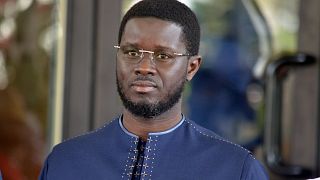
Senegal President Bassirou Diomaye Faye became embroiled in a political feud with his then prime minister, Ousmane Sonko, earlier this year over a variety of topics, including the IMF programme.
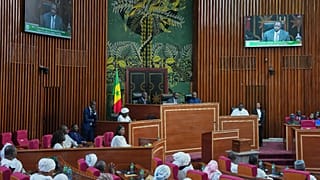
Although Faye sacked Sonko in May, Sonko was afterwards elected as speaker of the National Assembly -- a role that could complicate the president's ability to usher in IMF reforms.
While Faye prefers a more conciliatory approach with the IMF, Sonko has rejected any debt restructuring.
Global ratings agency Moody's last week downgraded Senegal's long-term foreign-currency debt rating to Caa2 from Caa1, mid-negotiations with the IMF.
![Debt Crisis: Senegal turns to the IMF ? [Business Africa]](https://images.euronews.com/articles/stories/09/76/53/11/320x180_cmsv2_a2ba34da-e92c-5765-8294-c042c8735140-9765311.jpg)


01:09
IMF raises Africa growth outlook, warns of shrinking aid
01:03
US wants to see Senegal’s debt restructuring completed within a year
01:00
Thailand: Bangkok protesters decry IMF and World Bank, warn of destructive capitalism
01:04
IMF chief optimistic Senegal will reach agreement with creditors
01:30
African debt crisis deepens ahead of IMF economic outlook report
01:09
Human Rights Watch warns of LGBTQ+ crackdown in Senegal as arrests rise