



Democratic Republic Of Congo
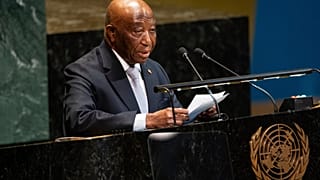
World Health Organization chief, Dr Tedros Adhanom Ghebreyesus, on Tuesday said the Ebola outbreak in the Democratic Republic of Congo is ‘far from being under control’.
He said the outbreak remained a global health emergency with a high risk of spreading to more countries in the region.
The deadly haemorrhagic virus has been spreading across the central African country since mid-May, with Ghebreyesus telling an emergency gathering of experts that it was moving faster than any previous one.
The UN agency said almost 5,000 people have been infected and more than 2,300 have died in that period, making it the deadliest in the country's history.
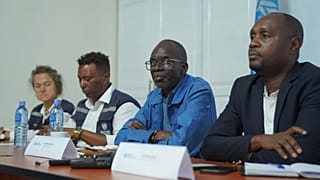
Dieudonne Mwamba, Director General of the DRC’s National Public Health Institute, said it has noted an increase in cases and deaths in recent weeks.
"Which can be explained, among other things, by unsafe areas where our teams have struggled to carry out activities and gain access,” he said.
Mwamba added that misinformation continued to be spread about the disease resulting in resistance within the affected communities.
It has spread to six provinces in the north and east where state presence is weak, health infrastructure is largely lacking, and fighting continues with various armed groups.
Mwamba said there was a need tocombine efforts to quickly bring the epidemic under control by containing it where it is currently present.
“Starting with the epicentre, which is still Ituri Province, while preventing the other high-risk provinces from being affected by this epidemic,” he said.
Ghebreyesus urged the international community to assist in efforts to contain the outbreak of the deadly haemorrhagic virus.
He called for governments to cooperate in fighting it and said new recommendations would be issued to DRC and other countries at risk in the coming days.
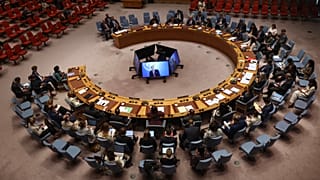
Tuesday marked the second meeting of the WHO emergency committee since the 17 May when it declared the outbreak a Public Health Emergency of International Concern, its second-highest alert level.
It remained unclear when the committee would release its recommendations.
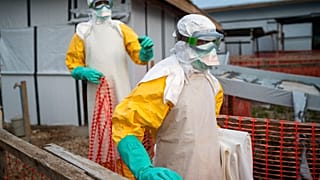
The virus spreads through contact with bodily fluids and causes a haemorrhagic fever. No specific vaccine or treatment exists for the Bundibugyo strain behind the current surge of Ebola, although clinical trials are underway.
The WHO chief said that what concerned him most was "where people are dying - at home, in their communities, outside treatment centres, and outside known contact lists".
"Every death like that points to a chain of transmission we have not yet found," he said, warning that "until every chain is found and broken, the epidemic will continue".



01:12
WHO says attacks on ambulances affecting DRC Ebola response
01:33
MSF calls for a massive scale-up to contain Ebola outbreak in DRC
10:00
Ebola DRC: The Deadliest Outbreak in the Country's History [Africanews Today]
01:51
Ebola: Water scarcity hampers control efforts in epicentre
02:06
Cholera outbreak spreads in Cameroon as cases top 1,000
02:19
Unpaid health workers strike as Congo’s Ebola contact tracing falls behind