



Democracy
As internet access surges across the continent, rights advocates warn that laws meant to combat cybercrime are increasingly being used to police political speech, raising fresh questions over where Africa should draw the line between security and freedom of expression.
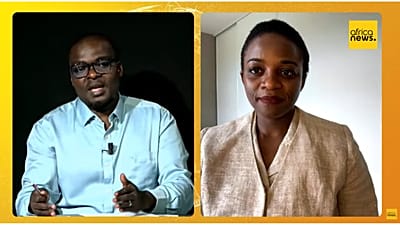
Speaking on the August episode of Africanews Debates, Julie Owono, Executive Director of Internet Sans Frontières and a member of Meta's Oversight Board, said legislation introduced to combat cybercrime and strengthen national security is increasingly being used to prosecute online expression.
"Africa has almost 650 million internet users today, compared with about 450 million ten years ago," Owono said. "The same laws that are allegedly adopted to protect us are now being used, unfortunately, to criminalise our expression online as citizens, and to arrest us."
She argued that as more Africans turn to digital platforms to discuss politics, hold leaders accountable and participate in public debate, governments have responded with broader legal powers to monitor and restrict online activity.
Cybercrime laws under scrutiny
Owono cited several countries where cybercrime legislation has become a source of concern for rights groups.
In Côte d'Ivoire, she pointed to a cybercrime law adopted in 2013 that criminalises certain online criticism of the president. In Cameroon, she said legislation introduced in 2010 makes it an offence to publish online information that cannot be proven to be true, a provision she argued has been used against government critics.
She also referenced the case of Cameroonian activist Junior Ngombe, who was arrested after encouraging citizens during a TikTok livestream to vote in the country's 2025 presidential election.
In Tanzania, she said periods of political tension have been accompanied by internet restrictions and arrests of government critics, illustrating what she described as a broader pattern across the continent.
The growing role of tech companies
Owono said governments are no longer the only actors shaping online speech.
She argued that major technology companies are increasingly complying with government requests to remove content or restrict accounts, sometimes without sufficient scrutiny.
Among the examples she cited was Tanzanian activist Maria Sarungi Tsehai, whose Meta accounts were temporarily restricted following a request linked to Tanzanian authorities.
Owono said companies should evaluate every government request against three principles promoted by the Global Network Initiative: legality, necessity and proportionality.
"Can we take down a whole account simply because someone has said they don't agree with the way the election were conducted?" she asked.
A global challenge
While much of the debate focused on Africa, Owono stressed that shrinking online freedoms are part of a wider global trend.
She pointed to Freedom House's annual Freedom on the Net report, which has documented a decline in internet freedom worldwide, and criticised efforts by governments outside Africa to expand surveillance powers.
Referring to the UK government's attempt to obtain access to encrypted Apple iCloud data, she warned that measures introduced in the name of national security can gradually erode fundamental rights.
She also urged African policymakers to strengthen their understanding of how digital platforms operate, suggesting that lawmakers engage directly with technology companies developing the systems they seek to regulate.
As Africa's digital population continues to grow, she said, the challenge will be finding a balance between tackling genuine online harm and protecting the right of citizens to speak freely.


01:39
Zambia's Hichilema sworn in for a second term after tense vote
01:14
Ethiopia backs executive presidency plan, raising fears of power grab
01:00
Mexico: Aura battles turn a viral meme into live contests
01:24
New protests in Tunisia calling for ousting of President Kais Saied
00:56
Hichilema takes early lead as Zambia election count passes halfway
01:17
Moroccan authorities say they have beefed up security at Ceuta border