



Kenya
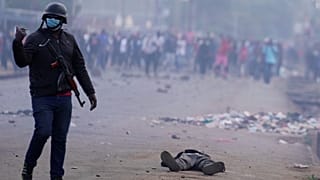
Kenya is witnessing a growing use of hired gangs by political actors to intimidate opponents, disrupt protests and silence dissent, rights advocates warn. As poverty fuels recruitment and elections draw closer, fears are mounting that the trend could undermine democracy and trigger wider political violence.
Kenyan human rights organisations are warning of an alarming rise in the use of hired gangs—commonly referred to as "goons"—by political actors seeking to intimidate rivals, disrupt demonstrations and suppress civic activism ahead of the country's 2027 general elections.
Demas Kiprono, Executive Director of the International Commission of Jurists Kenya, described the phenomenon as a recurring feature of periods of intense political competition.
"Whenever there is high political contestation in Kenya, there are things that happen to human rights and democratic freedoms that we find abhorrent," he said, warning of "the proliferation of goonism" by individuals allegedly paid to violate the rights of others for political gain.
A tool of informal repression
According to the Kenya Human Rights Commission, the use of politically sponsored gangs amounts to what scholars describe as "informal repression."
"What you call goonism is what is scholarly known as informal repression," said Ernest Oduor, the commission's Head of Communication. "It is where the state outsources violence to informal groups."
He argued that such tactics serve two purposes: undermining the legitimacy of protest movements while allowing authorities to avoid direct responsibility for violence.
Rights advocates have expressed concern over what they describe as insufficient police action against the groups, despite repeated incidents involving political rallies, demonstrations and civil society events.
Cheap recruits in a struggling economy
An investigation by AFP found that politicians can recruit armed gangs for as little as 500 Kenyan shillings—about four US dollars—a day, with payments increasing depending on the political figure hiring them.
Many recruits come from Nairobi's impoverished informal settlements, where unemployment and limited educational opportunities leave young people vulnerable.
One 27-year-old man, identified only as Marius, told AFP he abandoned his dream of becoming a surgeon after his family could no longer afford school fees. He has worked as a hired enforcer since he was 17.
"You end up being a goon to at least earn something," he said.
Another recruit, Daniel, who studied criminology but failed to secure formal employment, said many graduates remain locked out of the job market.
"They say education is the key, but honestly speaking we never find the padlock open," he said.
Police accused of looking away
Human rights groups and analysts allege that security forces have, in some cases, failed to intervene while gangs attacked protesters or opposition gatherings.
AFP reported witnessing armed groups operating alongside police during anti-government protests last year, while CCTV footage from June reportedly showed officers moving with armed men who stormed a civil society meeting at Nairobi's All Saints Church.
Police spokesperson Michael Muchiri rejected suggestions of institutional collusion, describing the allegations as "preposterous" and insisting that any officers involved were acting independently and remained under investigation.
"The National Police Service is determined to ensure the goon culture does not gain a foothold in this country," he said.
A long history of political violence
The use of politically mobilised youth groups is not new in Kenya.
Analysts trace the practice back to the early 1990s under former President Daniel arap Moi, when the Youth for KANU '92 movement was accused of vote buying and political violence.
Current President William Ruto was among the organisers of that campaign and was later charged by the International Criminal Court over the 2007-08 post-election violence, although the case was eventually dropped after witness-related issues.
Some former gang members interviewed by AFP claim demand for hired enforcers has risen again since Ruto took office in 2022, particularly during youth-led protests over corruption and the rising cost of living.
The government did not respond to AFP's requests for comment.
Fears for the 2027 elections
Rights organisations warn that unless authorities address the growing reliance on politically sponsored gangs, Kenya's democratic process could face increasing instability.
Kiprono argues that the solution lies in strengthening independent policing rooted in constitutional principles and community trust.
"To deal with this goonism we need an independent, strong police that is governed by the constitution and is democratic," he said.
With election campaigns expected to intensify over the coming months, observers fear the combination of economic hardship, political rivalry and organised violence could threaten the credibility of Kenya's 2027 polls.






02:04
Zimbabwe’s mobile clinic helps teenagers access contraception amid aid cuts
01:12
Ethiopia and Eritrea trade war accusations as regional conflict threatens to escalate
00:45
South African human rights lawyer wins 2026 Nobel Peace Prize
Go to video
Tigray war: Why peace talks may fail before they even begin {Africanews Debates}
11:19
Solar emerges as an alternative to Nigeria’s unreliable grid {Business Africa}
Go to video
Nigeria: 20 kidnapped graduates rescued after week-long search