



Kenya
Kenya's parliament has instituted a ban on the iconic Kaunda suit, named after the late Zambian President Kenneth Kaunda, within its premises.
Speaker of Parliament Moses Wetangula says both Kaunda suits and traditional African attire were no longer permissible.
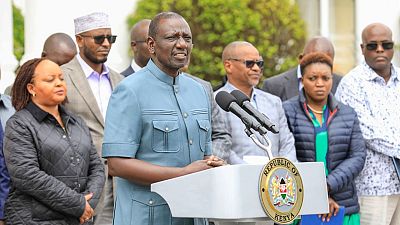
Notably, Kenyan President William Ruto frequently dons the Kaunda suit during official events, contributing to its popularity among the political elite not only in Kenya but also in some parts of Africa.
The Kaunda suit, characterized by a safari jacket and matching trousers, draws its name from the Zambian president, who played a pivotal role in making it a fashion.
Speaker Wetangula attributed the ban to emerging fashion trends that posed a challenge to the established parliamentary dress code.
He emphasized a prescribed dress code for men, including a coat, collar, tie, long-sleeved shirt, long trousers, socks, shoes, or service uniform. For women, the guidelines specify business, formal, or smart casual wear with skirts and dresses below knee-length and sleeveless blouses prohibited.
Acknowledging the past tolerance of the Kaunda suit in parliament, Wetangula emphasized the need to halt this practice to preserve the parliamentary dress code. The Kaunda suit gained recent attention on social media in Kenya due to President Ruto's frequent appearances in it during official functions.
The ban has stirred mixed reactions on social media, with some questioning the prohibition of an African attire in an African parliament, while others express support.







01:06
Kenya reports second Ebola case, family member of first patient
02:18
Kenyans in border town 'afraid' of Ebola risk after first death
10:00
Ethiopia: Adwa recaptured amid tensions with Eritrea [Africanews Today]
01:47
Moroccan king says youth issues must be at forefront of policy agenda
02:01
Kenya boosts Ebola preparedness after registering first case
01:08
Libya's eastern-based parliament removes speaker amid growing discontent