



Democratic Republic Of Congo
In the territory of Nyiragongo, in the east of the Democratic Republic of Congo, maize farmers are crying foul.
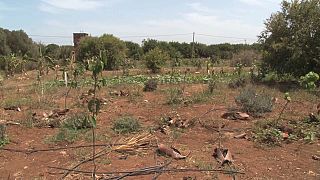
This field belonging to the Munguiko community has been ravaged by the armyworm and the damage is enormous. The pests attack the leaves and stems of maize plants, leaving them unable to grow or reach the flowering stage.
"It is army worms that attack our fields. They appear any time; in the dry season or the rainy season," said a farmer whose field has been devastated.
The pest is of interest to agronomist Jadot Mateso, who has set up a small nursery where maize seedlings are well preserved and then taken to the fields.
Madot has urged farmers to plant varieties resistant to armyworm. In recent years, the pest has devastated maize fields in Uganda, Zambia, Kenya among other countries.
"The caterpillar is called spodoptera frugiperda. It is native to North America. It causes a lot of damage in the fields. Production can reduce by upwards of 60%," said Madot.
The consequences are visible in the markets of Goma. The price of maize has risen significantly since production has been down following the appearance of this armyworm.
Georgette Nyabadé, a trader, says that a bag of maize that used to cost 30 or 35 US dollars is now being sold for 75 or 80 US dollars.
Armyworms are a serious crop pest in tropical and subtropical regions. These hungry caterpillars can defoliate entire fields of crops before moving on in their search for more food, with devastating economic consequences.
Maize is a major staple in the east of the Democratic Republic of Congo.
The armyworm invasion has caused fears of a food crisis in a region already hit by the conflict.






01:49
South Africa: Exclusion from AGOA does not mean end of trade with US
00:53
South Africa's bilateral trade with China surges after zero-tariff deal
02:05
Prized wild pepper at risk in Madagascar's shrinking forests
01:07
Flooded streets, damage in Libya as heavy rains paralyse capital
01:56
Environmentalists protest at African Energy Week in Cape Town
Go to video
Africa records world's fastest gains in disaster resilience - new study