



Eritrea
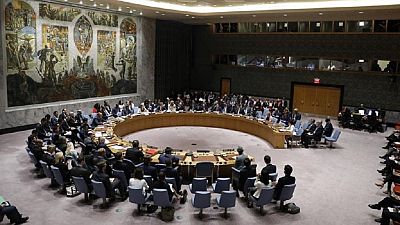
Eritrea has continued its demand that sanctions imposed by the United Nations Security Council, UNSC, be lifted.
In an editorial issued by information minister Yemane Meskel, the UNSC continued to flout UN rules by the sanctions.
He reiterated Asmara’s stance that the continuation of sanctions were a ‘‘severe miscarriage of justice, politically motivated, and not rooted on genuine concern for regional or international peace and security”
He took time to enumerate a number of economic consequences of the 2009 and 2011 sanctions.
“Although often overlooked / downplayed, the economic ramifications of the sanctions have been severe, entailing deleterious impact on investment; harassment of mining companies; higher cost of capital for commercial loans; higher shipping / insurance costs; barriers to imports etc…,” Meskel said.
“The “arms embargo” was in contravention of Article 51 of the UN Charter on the right of self-defense in the context of occupation of Eritrea’s sovereign territories & in flagrant violation of the EEBC Arbitral Award & the Algiers Agreement that the UNSC itself had guaranteed.
“The “asset freeze/travel ban” components of the sanctions regime were pure and banal instruments of harassment. They were in fact never invoked in practice,” he added.
Eritrea’s representative at the just-ended 73rd UN General Assembly, dedicated the entire address to calls for lifting of sanctions. Other countries in the Horn of Africa – Ethiopia, Somalia and Djibouti – all backed the lifting of sanctions in their addresses.


01:14
Gold smuggling from DRC's Ituri province to Uganda on the rise, says UN
02:01
One year after Washington peace deal, eastern DRC still waiting for peace
01:01
Iran says Strait of Hormuz closed again after Israeli attacks on Lebanon
01:27
Tehran residents cautiously welcome Iran-U.S. peace deal amid hopes and skepticism
01:11
Tigrayan forces preparing offensive against federal gov, Addis Ababa warns
01:11
Iran closes Strait of Hormuz to all vessels, state TV reports