



Eritrea
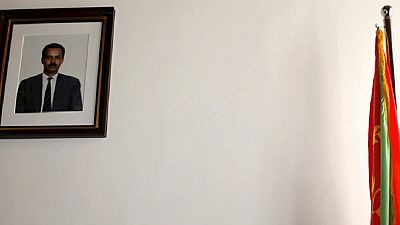
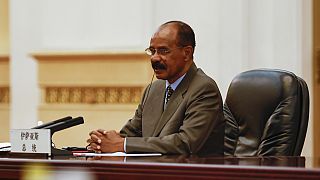
Eritrea’s information minister, Yemane G. Meskel has reiterated his country’s position on sanctions imposed by the United Nations in 2009, tweeting that ‘they were not based on fact and law’.
Eritrea has long dismissed accusations of human rights abuses by the U.N., including alleged extrajudicial killings and torture, as “totally unfounded and without merit.”
The sanctions including an arms embargo, travel restrictions and asset freezes for some of the country’s top officials, were also rooted in allegations that it provided support to militants in Somalia and for failing to pull troops out of disputed territory with Djibouti.
While Eritrea has in recent months normalised realisation with Ethiopia, Somalia and Djibouti, a top U.S. diplomat told a congressional hearing on Wednesday that it was too soon to talk about lifting the sanctions.
“Eritrea cannot assume that by saying wonderful things and opening good relations with the neighbors that will automatically lead to sanctions relief,” said Tibor Nagy, the U.S. State Department’s assistant secretary for Africa.
Meskel on the other hand believes any arguments for the ‘continued maintenance’ of the sanctions ‘can only be seen as a travesty of justice’.
“Let us reiterate Eritrea’s position for the umpteenth time: the sanctions were not based on fact & law and they were unwarranted in the first place. “Arguments” for their continued maintenance has no rationale whatsoever and can only be seen as a travesty of justice and law,” Meskel wrote on Twitter.
Let us reiterate Eritrea's position for the umpteenth time: the sanctions were not based on fact & law and they were unwarranted in the first place. “Arguments” for their continued maintenance has no rationale whatsoever and can only be seen as a travesty of justice and law
— Yemane G. Meskel (@hawelti) September 14, 2018
United States’ concerns
Tibor added that while Washington had deliberately engaged with Eritrea in recent months, the country’s human rights record was still a concern.
- Among concerns that the United States had raised with Eritrea was the detention of U.S. embassy local staff and several Americans for what Nagy called politically-motivated reasons.
- The United States also wanted a full explanation from Eritrea over past weapons purchases from North Korea highlighted in a U.N. report.
- Nagy also said the jailing of religious and political prisoners and indefinite, obligatory national service, as well as a tightly-controlled system of government were also a worry.
“There have to be concrete actions taken and we will remain very engaged and say things that may not always be popular but have to be said,” he added.
The July declaration by Eritrea and Ethiopia which effectively ended two decades of hostilities, has given several Eritreans and human rights activist hope that Isaias Afwerki’s government would reform now that the existential threat of a powerful Ethiopian enemy is no more.
“Up to now for the last 20-plus years Eritrea has used Ethiopia as an excuse to maintain what I would almost call a ‘fortress state’,” Nagy said. “With the opening of peace they really will no longer have a reason to do that.”
ALSO READ: Eritrea determined to recoup, rebuild lost opportunities – Afwerki

01:35
UN and Haitian officials mark one year since Kenyan police arrived to support security efforts
01:42
Gaza residents welcome rare organized aid delivery after months of chaos and hunger
01:50
UN urges renewed political and climate action in Libya amid humanitarian and governance crises
00:58
Cash crunch stalls UN probe into possible war crimes in DR Congo
01:37
South Africa calls for peaceful resolution to Israel-Iran conflict
01:03
United Nations harnesses power of music for peace in South Sudan