



Mali
Mali’s security crisis intensified this week as jihadist group JNIM announced a blockade on all roads leading to Bamako, even as junta leader Assimi Goita appeared publicly for the first time in days to claim the situation was “under control.”
In a video released Tuesday, JNIM spokesperson Bina Diarra declared that all routes into Bamako were now blocked, allowing only those already inside the capital to leave.
He warned that anyone attempting to enter would face consequences, "including the risk of death," and adding that the same restrictions applied to the nearby garrison town of Kati.
AFP was unable to verify whether the blockade was actually in effect.
Analysts say the recent assaults near key centres of power may be part of a broader strategy to secure control of Kidal, a strategic northern city seized by armed groups over the weekend.
Goita breaks silence amid speculation over his fate
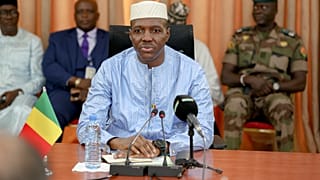
After several days of absence that fuelled rumours about his whereabouts, Goita addressed the nation on state television Tuesday night.
He insisted that “the enemy’s plan has been foiled” and that the security situation was “under control,” while acknowledging the “extreme gravity” of the moment.
He urged Malians to unite and resist division, saying the country needed “clarity, not panic.”
His silence had raised questions about his ability to remain in power, especially after Defence Minister Sadio Camara — one of the junta’s most influential figures and a key architect of Mali’s military partnership with Russia — was killed in the attacks.
Russia signals concern as its forces retreat
Earlier in the day, Goita met with Russia’s ambassador Igor Gromyko, who reaffirmed Moscow’s support.
But Russia’s Defence Ministry later acknowledged that jihadist and rebel forces were regrouping and described the situation as “difficult.”
It confirmed that Africa Corps paramilitaries had withdrawn from Kidal after losing control of the city.
The Kremlin said it hoped stability would return quickly to Mali, which has faced conflict and jihadist violence since 2012.
Rebels vow the Junta will fall
Mohamed Elmaouloud Ramadane, a spokesperson for the Tuareg-led Azawad Liberation Front (FLA), said the Bamako regime “will fall sooner or later,” arguing that the junta cannot withstand simultaneous offensives in the north and around the capital.
Experts note that while jihadists and Tuareg separatists have historically clashed, they now appear aligned against a common adversary: the ruling junta and its Russian military partners.
Northern reconquest seen as key objective
Despite the dramatic threat to Bamako, analysts believe the alliance between JNIM and the FLA is primarily focused on reclaiming northern regions long contested between the state and armed groups.
With Kidal already in rebel hands and government forces abandoning several positions in Gao, the balance of power in Mali is shifting once again.





01:14
Mali’s information war is increasingly being shaped by AI
01:26
Thousands rally to back Niger authorities after thwarted mutiny
02:20
Mali: Mariam Bagayoko continues to impress on stage aged 88
Go to video
Nigeria confirms planned withdrawal of US troops sent to help tackle insecurity crisis
01:43
Dozens of soldiers arrested in Niger after attempted mutiny
01:01
Reports of gunfire near military base in Niger's capital