



Illegal immigration
Every hour is crucial when searching for distressed migrant boats off the coast of West Africa. The long route and harsh weather in the Atlantic can easily spell disaster for the people aboard.
But for those working with a nonprofit that conducts aerial surveillance, Humanitarian Pilot Initiative (HPI), it is like looking for a needle in a haystack.
"If we get information about a case, we can launch a flight and look for them. The thing is that also the information that we get is quite fragmented,” said HPI’s tactical coordinator, Samira.
Migrants are usually trying to reach Europe via the Spanish Canary Islands which lies about 120 kilometres off the north-west coast of Africa.
But with increased measures to curb illegal migration, many are leaving from countries further south, like The Gambia, despite the longer journey and greater hardships.
She said that a recent example involved a boat that has left from there about eight days beforehand but had not arrived.
The 1,000 nautical mile route usually takes approximately 10 days, she said, but there are additional complications in searching for a vessel.
“If you consider that the boat might get lost the first day, we would have to look in a completely different area than on the eighth day. So, that makes it really, like, almost impossible to find them."
Boats have previously drifted so far as to reach the Caribbean or South America without any survivors.
It’s effectively like searching a huge area from hundreds of metres up in the air, with the hope of finding and helping people before it’s too late.
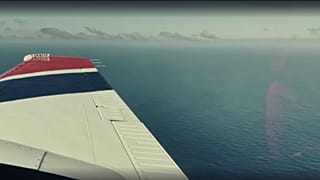
Flying on a mission to find a reported boat, Oumar El Manfalouty, who pilots the NGO's Beechcraft Baron 58 nicknamed "Seabird" said he was going to have to scan an area approximately 800 kilometres south of Spanish archipelago.
“We suspect that the boats, if they are still out there, will be in that area. Conditions are pretty difficult. High waves, high winds,” he said.
“And we're going to keep a sharp lookout because now, of course, every hour counts. People could well be dead or dying from dehydration, heat stroke, or any other conditions."
Once HPI spots a vessel, it sends an alert for emergency response to nearby merchant ships so that it can provide immediate support. After that, Spain's maritime safety and rescue authority, Salvamento Maritimo, takes over.
Near a migrant reception centre in Las Palmas, a city in the Canary Islands, Ousmane Ly, a 25-year-old Senegalese man who recently arrived via The Gambia, gazed at the beach along with others.
The joy of having made it to the archipelago outweighed the difficulty some were having walking after days crammed into a pirogue. Their hands, arms and legs bore wounds caused by the salt water.
He recounted how once they boarded the small boat, he and the other passengers were covered with a tarpaulin, used to protect them from the sun during the day and cold at night.
It was removed only 10 days later, when the boat was rescued by Salvamento Maritimo.
He said it used to be possible to travel to Europe through Mauritania which would only take five to six days, but the increased surveillance has made that complicated.
“That’s why we look for other countries to leave. We do this because we believe in ourselves and want to help our families. That’s why we take this risk," he said.
While Ly may now be safe on dry land, the Spanish NGO Caminando Fronteras says more than 3,000 migrants died last year while attempting to reach the archipelago illegally.








01:36
Undocumented migrants celebrate Spain's plan to legalise their status
Go to video
Ethiopian police arrest 22 in human trafficking crackdown
01:12
Rwanda says UK owes $130 million over scrapped asylum scheme
00:53
Shipping data shows Indian diesel exports to West Africa at record high
01:44
'I begged them': the Guinean mother deported from Belarus without her baby
00:53
Gambian authorities intercept 780 migrants trying to reach Europe