



Cuba
It’s a New Year tradition in Cuba: the "Letter of the Year" from the Santería priests. Dressed in their characteristic white, religious followers played drums and danced around an altar in Havana on Friday, as the priests revealed their predictions for 2026.
The priests who are known as Babalawos agreed to warn of an increase in violence and the dangers of war.
Cuban Babalawos announced that the ruling deity for 2026 will be Oggún, lord of metals—or weapons—roads, and conflicts. He is also the patron saint of blacksmiths. The religious leaders explained that Oggún's accompanying deity is Oya, the goddess of winds and storms.
The combination of these signs and their deities could bring illness, and among the social events of interest are the proliferation of fires and accidents, an increase in violent and criminal acts, and even "significant changes within the Cuban government," according to a document they briefed.
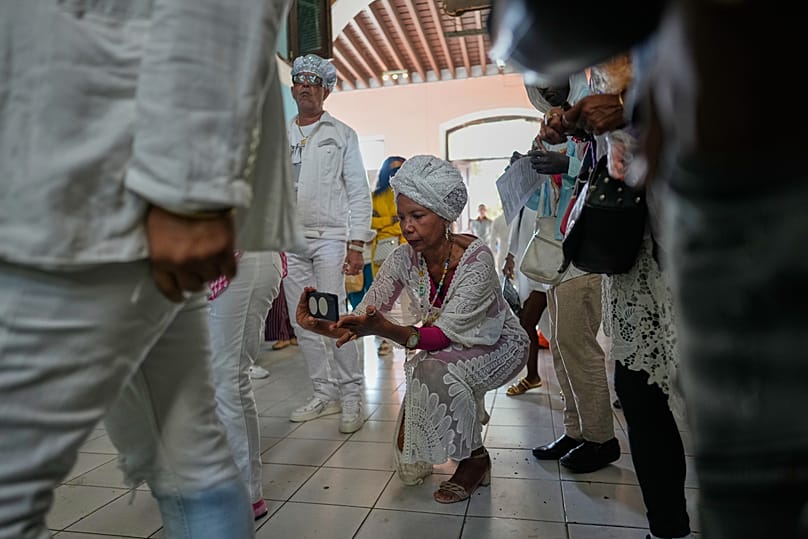
The Babalawos made a strong call for peace and prayed for it during the "Letter of the Year" ceremony.
"In religions, we always want peace and health, in all religions. This is what we are asking for; peace and health," said Silvio Mendez, a Babalawo.
The Babalawos also acknowledged the current tensions in the Caribbean, since exacerbated by Saturday's US military strikes on Caracas and the capture of Venezuelan President Nicolas Maduro.
“The Americans are blocking Venezuela and taking over the Caribbean, but so far we have survived and will continue to survive. We will fight on all fronts because nobody wants a war. It is not only us in our religion; nobody wants it," said Danilo Hurtado, the head of the Council of Santería Priests.
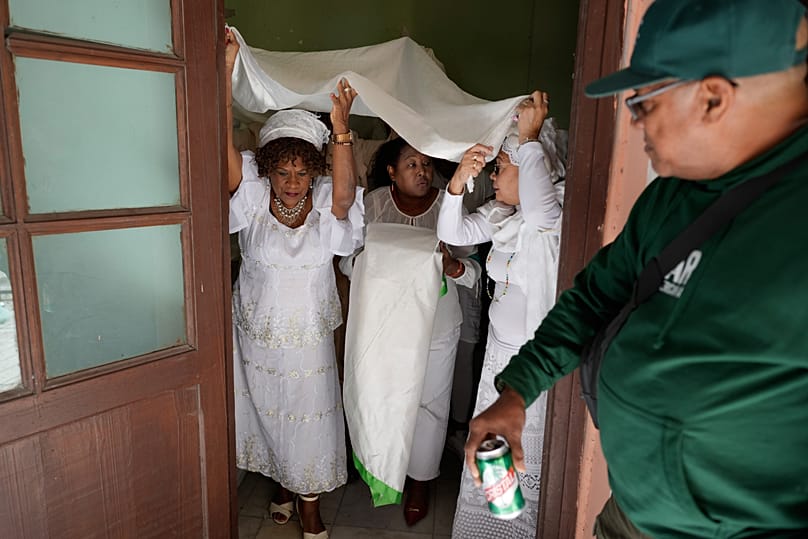
Every year, thousands of people on the island await the "Letter", in which their religious houses participate, and the instructions for actions or rituals for believers that are transmitted by priests of Santería, the most widespread cult on the island.
It has spread to neighboring countries such as Mexico, Venezuela, Brazil, Spain, and the United States, where there are strong Cuban communities.
Santería was born from the syncretism of the Spanish traditions of the colonisers with those brought by African slaves and became established on the island.




02:38
Fasting together: Ramadan and Lent in Sierra Leone’s spirit of harmony
01:00
Japan: Akiba Festival draws crowds despite winter cold
Go to video
Kenya starvation cult preacher Paul Mackenzie charged over 52 more deaths
01:00
Pix of the Day January 28, 2026
01:00
Japan: Traditional rice pounding ceremony held in snowy Aomori village
01:00
Pix of the Day January 13, 2026