



Mali
Mali's opposition accuses military junta of failing to protect the country amid a long-running shortage of fuel.
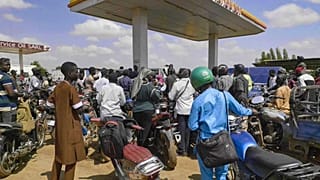
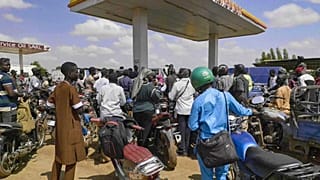
For the last two months, Mali’s capital, Bamako, has face a growing shortage of petroleum products.
Now the country’s opposition is urging the population to “open their eyes” to a regime that “seizes the nation” without protecting it.
The al-Qaeda affiliated Support Group for Islam and Muslims, or JNIM, has orchestrated the shortage by blocking the country’s fuel supply routes, even going so far as to set fire to fuel tankers transporting petrol.
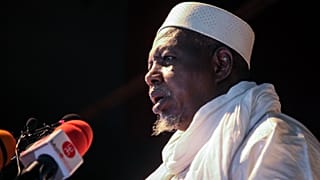
The situation is having social and economic repercussions, prompting the head of Mali’s transitional government, General Assimi Goïta, to call for unity in the face of what he described as a “terrorist threat.”
This comes even as his foreign minister tries to downplay the situation, claiming that there is no blockade of the capital.
Several countries have recently urged their citizens to leave Mali, raising concerns about the scale of the country’s security crisis.
In July, Goïta, the leader of Mali’s military junta, passed a law extending his stay in power until at least 2030
01:15
Malawi: supply stocks improve, but fuel crisis far from over
01:13
Turkey to boost its anti-terrorism support to Somalia
Go to video
Jihadist group releases video it claims shows attack on Niamey airbase
02:23
Kenyan court dismisses compensation claim by victims of 1998 Nairobi bombing
01:00
Aid groups warn of life-threatening conditions in Gaza due to fuel crisis
01:26
Somalia's National Army brings 'total war' to al-Shabab militants