



Afghanistan
As the death toll from Sunday’s earthquake in Afghanistan rises, global aid agencies are warning of dwindling funds for food, shelter, and medicines for survivors.
Just a few countries have publicly committed money with many traditional donors yet to come forward with assistance.
In addition, poor infrastructure in the country that is still fragile following decades of war, has also hampered the emergency response.
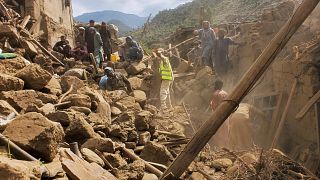
Taliban officials on Thursday said the death toll was now close to 1,500, but that number is expected to rise as rescue workers battle to pull bodies from destroyed buildings.
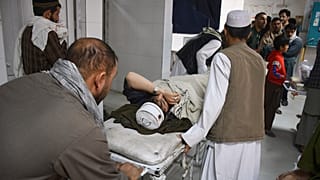
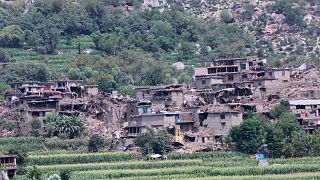
About 3,400 people have been injured while close to 7,000 homes were destroyed in the quake and its aftershocks.
The World Health Organization warned that the window for finding survivors is closing fast and that every hour counts to get help to those who need it.
At the same time, the International Federation of Red Cross and Red Crescent Societies said humanitarian needs are “vast and growing rapidly”.
International funding to Afghanistan has fallen dramatically since the Taliban takeover in 2021, and just 28 per cent of the target for humanitarian aid has been met this year.
The United Nations and aid agencies are calling on donors to step up with the World Food Programme warning it has funding and stocks to support survivors for just four more weeks.
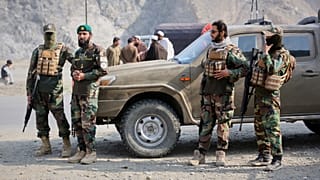
Rescue teams have struggled to reach affected communities in Kunar, the worst-affected province, hampered by rockfalls and landslides.
Some are walking for hours to deliver aid and medicine, often up steep hills. People from surrounding areas have rushed in to help.

01:12
UN migration agency warns 874,000 Somalians at risk of displacement from flooding
01:00
China: Panic as 7.0-magnitude earthquake rocks Tibet
00:50
UN agencies appeal for help to protect weakest nations from super El Niño
01:15
More than 40 civilians killed in Mali attack blamed on Islamic State
01:00
Ukraine: Russian missiles hit Kyiv homes and power plant, killing 3 and injuring 22
01:00
Russia pounds Kharkiv and Lviv region with missiles and drones, killing three civilians