



Mali
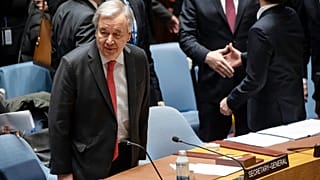
The United Nations held a Security Council meeting Thursday, where Leonardo Santos Simão, The head of the UN Office for West Africa and the Sahel (UNOWAS), spoke about the developments of terrorist activities in the region Simão told the council that terrorism, “has surged in scale, complexity and sophistication, including through the use of drones, alternative internet communication, and increasing collusion with transnational organized crime.”
Simão also pointed out that “only 14 percent of funding for the 2025 Humanitarian Needs and Response Plan for the Sahel region has been received - resource mobilization is urgently needed to save the lives of millions of people at risk.”
On July 30th, UN experts reported that extremist groups in West Africa, like the al-Qaida-linked Jama’at Nasr al-Islam wal-Muslimin group, known as JNIM, and East Africa's al-Qaida-linked al-Shabab have continued to increase the territory under their control.
The experts monitoring sanctions against the two groups said it's growth in Africa is partly because of Islamic State losses in the Middle East due to counterterrorism pressures.
In Africa’s Sahel region, the experts said, JNIM expanded its area of operations, operating “with relative freedom” in northern Mali and most of Burkina Faso.

01:14
Al-Qaeda and IS rivalry sparks fierce fighting across Sahel
01:14
Mali hosts more than 322,000 refugees and asylum seekers
01:02
Malian army and Russian fighters retake key city of Kidal, abandoned by rebels
02:20
Burkina Faso deaf dancers use special technique to follow rhythm
02:08
Burkina Faso's military leaders mark four years in power
01:14
Mali: more than 2,400 schools remain closed as insecurity disrupts new school year