



Senegal
The Senegalese government on Thursday cited judicial delays and the "precautionary principle" to justify the fact that the authorities have still not arrested opposition politician Ousmane Sonko, who has been sentenced to prison, but are blocking him at his home.
"Why hasn't Ousmane Sonko been arrested? He needs to be notified of the (sentencing) decision. The decision is being drafted," said Justice Minister Ismaïla Madior Fall.
"Senegalese justice is independent. It works at its own pace," he added at a government press conference in Dakar.
Opposition politician Ousmane Sonko was sentenced on June 1 to two years' imprisonment in a vice case. This conviction renders him ineligible for the 2024 presidential elections.
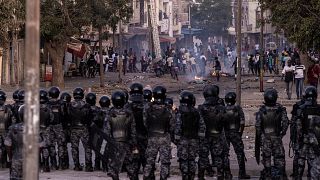
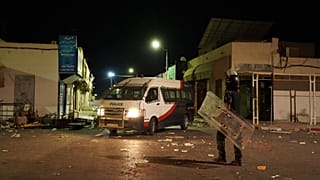
It triggered the worst unrest Senegal has seen in years. The clashes caused at least 16 deaths according to the authorities, 23 according to the NGO Amnesty International and 26 according to the opposition.
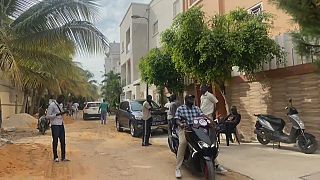
Ousmane Sonko, who cries conspiracy, has refused to attend his trial. He has been blocked by security forces at his home in Dakar, "sequestered" according to him, since May 28.
Interior Minister Antoine Diome justified the "restrictions" imposed on Mr. Sonko by the latter's calls for "resistance".
"Someone who gets up and says he's going to do a caravan (a procession), that he's going to do rallies without (prior) declaration... we see deaths, are we going to let him go around Senegal, do rallies and count the dead behind? We can't," he said.
He indicated that these "restrictions" could be "progressive" and that the roadblocks around Mr. Sonko's home could be lifted when the authorities saw fit.



01:00
Belgian university suspends academic who accused Arday of plagiarism
01:06
DR Congo: Prosecutors seek 15-year prison sentence for ex-justice minister
01:00
Tibetan protesters in New Dehli denounce China with shaved heads and prayers
01:05
Zambian opposition leader to challenge presidential poll results in court
02:15
Senegal elite girls' school empowers students to imagine a new future
10:00
Ebola DRC: The Deadliest Outbreak in the Country's History [Africanews Today]