



Chad
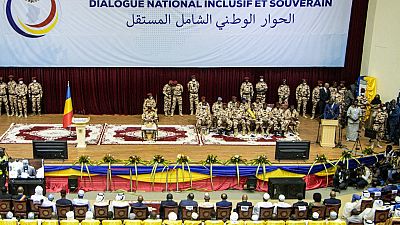
The election in Chad of the members of the presidium, the body in charge of leading the work of the "inclusive and sovereign national dialogue" (DNIS) between the civilian and armed opposition and the junta, took place in a stormy atmosphere, AFP noted on Sunday.
The head of the junta, Mahamat Idriss Déby Itno, had kicked off this dialogue on August 20 in N'Djamena, boycotted by some armed groups and members of civil society. It is expected to lead to "free and democratic" elections and the transfer of power to civilians.
More than 500 of the 1,400 dialogue delegates applied to join the 21-member presidium. They were nominated by members of the Organizing Committee for the Inclusive National Dialogue (CODNI).
Gali Ngothé Gatta, a presidential candidate in 2016 against the former head of state Idriss Déby Itno, who ruled the country with an iron fist for 30 years, was elected to head the presidium.
"He is the right man for the job, he is a politician of great experience who has already been a minister," Saleh Kebzabo, former presidential candidate and opponent of Idriss Déby Itno, first vice-president of CODNI, told AFP.
But when the composition of this body was announced, many delegates stood up and shouted in protest.
"We were criticized for not including enough Arabic speakers in the list," Kebzabo said.
- "Monologue"-
"We dispute the establishment of this office. As things stand, we are not in favour and we call on Mahamat Idriss Déby to remedy this, otherwise, we will not participate in this dialogue," warned Gilbert Maoundonodji, a member of civil society.
"Apart from the president, the other members of the presidium are more or less on the same side of the political spectrum, so the game is up in advance, which is why we have decided to leave the dialogue," said Djerandi Laguerre Dionro, spokesman for 11 professional federations participating in the dialogue, including those of lawyers and doctors. "We let them continue their monologue," he concluded.
In a statement, several small political parties had threatened on Saturday to withdraw from the dialogue, denouncing "maneuvers aimed at undermining the success of this dialogue so long awaited by the Chadian people.
The work of the commissions, whose themes include social issues, peace, national reconciliation, and fundamental freedoms, is due to begin on August 30. The initial schedule calls for a closing ceremony on September 20.
Mahamat Idriss Déby Itno came to power in April 2021 following his father Idriss Déby, who died at the front against rebels.
The country's new strongman, who heads a Transitional Military Council (TMC), promised elections at the end of an 18-month transition period, which was supposed to end in October, and said he would not run.
But in June 2021 he made the first cut in his promises, considering an 18-month extension of the transition and handing over his "fate" to "God" on a possible presidential bid.
01:39
Zambia's Hichilema sworn in for a second term after tense vote
01:14
Ethiopia backs executive presidency plan, raising fears of power grab
01:02
Guinea: France joins calls for transparent investigation into mass grave
01:05
Opposition urges African Union to intervene in Zambia's disputed election
01:06
Uganda President’s son Muhoozi announces 2031 presidential bid
01:11
Zambia courts shut on final day for election challenge