



Egypt
Egyptian Prime Minister Moustafa Madbouli announced on Sunday that his government had started negotiations with the International Monetary Fund (IMF) to obtain a one-year financial assistance to cope with the recession caused by the coronavirus pandemic.
“We have started discussions with the IMF for financial assistance in addition to technical assistance,” Madbouli said at a televised press conference in Cairo, without specifying the amount of aid requested from the Washington-based financial institution.
By November 2016, Cairo had already secured a $12 billion (€10.7 billion) support package from the IMF, the last tranche of which was disbursed last year.
The Managing Director of the IMF, Kristalina Georgieva, stated in a press release that she had received a request from Egypt for emergency support via a “rapid financing instrument” in order to enable the government “to meet its immediate needs in terms of balance of payments and to come to the aid of the most affected sectors as well as the most vulnerable categories of population”.
The IMF, she added, is also working with the Egyptian government “to support a robust set of economic programmes through a stand-by arrangement”, a loan designed to respond quickly to countries’ external financing needs and to accompany policies aimed at emerging from crisis situations.
Praising Egypt’s economic performance before the emergence of the new coronavirus, Mr Madbouli said that the recent shutdown of the tourism and civil aviation sectors had been a key factor in this new request for international assistance.
In 2019, tourism alone, just recovering from several years of political and security instability, brought nearly $12.9 billion to the Egyptian economy.
“We do not know when this crisis will end (…) and we want to preserve the gains made by our economy,” Madbouli said, alongside other officials and ministers.
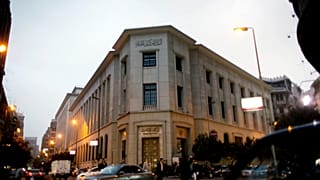
Tarek Amer, the governor of the Central Bank, said the pandemic had caused Cairo’s foreign exchange reserves to fall from $45.5 billion in February to $40.1 billion in March.
The Minister of Planning, Hala al-Saïd, for her part, estimated that the Egyptian GDP “would reach 4.5% in 2020”, a rate she judged “among the best in the world”, in a context of “unprecedented crisis”.
Since the popular uprising in 2011 that ousted former President Hosni Mubarak from power, the Egyptian economy has experienced great difficulties and is struggling to recover.
In power since 2014, President Abdel Fattah al-Sissi, under the aegis of the IMF, is pursuing a very unpopular austerity policy aimed at reducing the state budget deficit, notably by reducing subsidies for fuel, electricity and basic necessities.


01:30
US returns dozens of smuggled artifacts from three different eras to Egypt
01:09
China and Egypt launch second joint air force exercise
01:49
Turkey urges Egypt to join its defence pact with Saudi Arabia and Pakistan
00:50
At least 18 killed in Egypt truck crash, many children
01:13
Turkey, Egypt, and Qatar condemn Israeli violations of Gaza Strip truce
01:10
Egyptian PM announces investigation after Damietta port drone attack