



Guinea
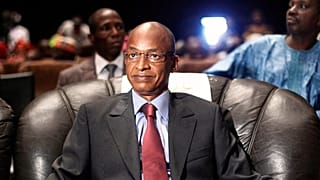
A Guinean appeals court has reduced former Prime Minister Ibrahima Kassory Fofana's prison sentence for corruption-related offences, paving the way for his release after more than four years in detention as the country's military-led government presses ahead with its anti-graft campaign.
A Guinean appeals court on Thursday reduced the prison sentence of former Prime Minister Ibrahima Kassory Fofana from five years to three years and nine months.
The ruling overturned his conviction for embezzling public funds but upheld guilty verdicts for illicit enrichment and money laundering. The revised sentence means Fofana has effectively completed his jail term, having remained in detention since April 2022 while receiving medical treatment in a clinic.
Financial penalties remain
In addition to the prison sentence, the appeals chamber ordered Fofana to pay three billion Guinean francs (about $340,000) to the state and approved the confiscation of part of his assets.
The former premier had been accused of misappropriating 15 billion Guinean francs allocated to COVID-19 response measures and socio-economic programmes.
From prime minister to prisoner
Fofana served as Guinea's prime minister under former President Alpha Condé from May 2018 until the military overthrew the government in September 2021.
His prosecution was handled by the Court for the Repression of Economic and Financial Offences (CRIEF), a special tribunal established shortly after the coup to investigate corruption and financial crimes.
Junta's anti-corruption drive under scrutiny
Fofana's case is among the most prominent prosecutions launched since the military seized power, with authorities presenting the campaign as part of efforts to tackle long-standing corruption.
However, critics argue that the crackdown has unfolded alongside a broader erosion of political freedoms under junta leader Mamady Doumbouya, who was elected president for a seven-year term in December in a vote from which major opposition figures were excluded.
Political tensions persist
Since taking power, the military-led government has suspended several political parties, maintained a ban on demonstrations introduced in 2022 and intensified pressure on opposition leaders and civil society activists.
Human rights organisations have also raised concerns over arrests, convictions, forced exile and a growing number of reported disappearances involving opposition activists, adding to scrutiny of Guinea's political transition.


02:04
Zimbabwe’s mobile clinic helps teenagers access contraception amid aid cuts
01:12
Ethiopia and Eritrea trade war accusations as regional conflict threatens to escalate
00:45
South African human rights lawyer wins 2026 Nobel Peace Prize
Go to video
Tigray war: Why peace talks may fail before they even begin {Africanews Debates}
01:09
Guinea-Bissau's electoral commission says conditions for December polls not met
11:19
Solar emerges as an alternative to Nigeria’s unreliable grid {Business Africa}