


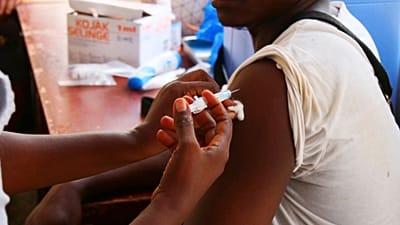

Ebola virus
When the World Health Organization declared a public health emergency on Sunday, it wasn't because of the usual Ebola virus.
This outbreak in the Democratic Republic of Congo is caused by Bundibugyo, a rare strain the world has no approved vaccine, no licensed treatment, and barely any experience fighting it.
The WHO's unprecedented move on 16 May classifies the outbreak as a "public health emergency of international concern" (PHEIC), the same level reserved for the most serious global health crises.
The Numbers
As of May 15, health officials recorded 246 suspected cases and 80 suspected deaths in DRC's Ituri province, with only 4 deaths officially confirmed. By Tuesday May 19, the death toll had climbed beyond 120, with nearly 400 potential infections.
The outbreak has already crossed borders. Uganda confirmed 2 cases in Kampala, both travelers from DRC, with 1 death.
What makes these numbers even more alarming is the uncertainty. The affected areas, Mongwalu and Rwampara health zones, are remote and located in one of Africa's most insecure regions, where armed groups operate freely. Health officials admit the true numbers are likely much higher**.**
What Makes Bundibugyo Different?
Bundibugyo is one of only four Ebola species known to infect humans, alongside Zaire, Sudan, and Taï Forest. Yet it's the rarest of the lot.
This is only the third documented Bundibugyo outbreak in history, according to the WHO. The first was in 2007–2008 in Bundibugyo, Uganda, the strain was named after that location. The second was in DRC in 2012. This is the first time it's triggered a global emergency".
The slower replication rate is deceptive. While Bundibugyo takes longer to incapacitate immune cells, the incubation period is the same: 8–10 days on average, up to 21 days. By the time symptoms appear, the virus has already spread.
The Deadly Gap: No Vaccine, No Treatment
Here's what has health officials most worried: there are no approved countermeasures.
Unlike the Zaire strain, which has been responsible for several outbreaks in the DRC, there are currently no approved therapeutics or vaccines specific to the Bundibugyo virus, the WHO explicitly stated in its emergency announcement.
The existing Ervebo vaccine, which has been used successfully in previous DRC outbreaks, does not offer effective protection against Bundibugyo. Emergency use authorization would be needed for any experimental treatment, a process that takes time the world may not have.
Why Symptoms Make Containment Harder
The early symptoms of Bundibugyo Ebola are deceptively similar to common diseases in the region: Fever, fatigue, malaise, Muscle aches, headaches, sore throats and later progresses to Vomiting, diarrhea, Severe internal/external bleeding, Multi-organ failure.
At least four healthcare workers died within four days of the outbreak's detection. Over 60% of cases are female, suggesting household and caregiving transmission, family members caring for sick relatives at home.
Cross-Border Spread and Regional Risk
The outbreak has already crossed from DRC into Uganda through travelers, raising concerns about regional spread. Health officials in Kampala are now monitoring 600+ contacts, with 15 classified as high-risk.
The WHO has recommended against border closures, citing that they would worsen the humanitarian crisis without meaningfully stopping the virus. Instead, enhanced surveillance at borders is being implemented.
For Europe, the risk remains low but not zero. The WHO explicitly stated that travelers from affected areas should be screened, but no travel restrictions are recommended.
A History of Neglect
This is the 17th Ebola outbreak in DRC since 1976, yet this is the first time Bundibugyo has triggered a global emergency. The Kasai Province outbreak that ended in October 2025 had 43 deaths and 42,000+ people vaccinated.
The Sudan ebolavirus outbreak in Uganda during spring 2025 also ended without a PHEIC declaration. What makes Bundibugyo different? The complete lack of medical countermeasures.
Bundibugyo was discovered less than two decades ago, in 2007–2008, Bundibugyo has been neglected because it's so rare.
Fruit bats are believed to be the primary reservoir, with all outbreaks occurring in the Congo River basin region.
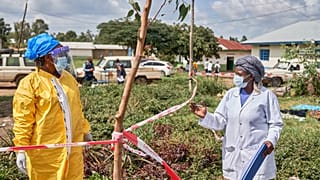
![DRC faces a severe Ebola outbreak caused by a highly lethal variant [Africanews Today]](https://images.euronews.com/articles/stories/09/76/28/09/320x180_cmsv2_899fc424-9c77-57f2-b86c-8733bc209822-9762809.jpg)


01:19
Ebola cases in DR Congo cross 8,000 as EU, US pledge further financial support
02:00
Ebola: Sharp jump in cases in North Kivu while outbreak slows in Ituri
01:02
DR Congo: Young doctor dies of Ebola as cases surge beyond epicentre
01:30
Ebola surveillance expands beyond DR Congo borders as IOM steps up efforts
01:57
Ebola response teams in DRC raise awareness among deaf
01:06
DR Congo confirms Ebola cases surpass 7,600 with 3,699 deaths