



Cameroon
The WTO's failure to reach significant agreements during high-level talks in Yaounde demonstrates its inability to adapt to a new reality of fragmented global trade, jeopardising a return to multilateralism, experts warn.
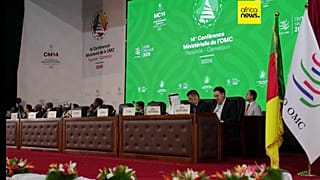
The World Trade Organization's 14th ministerial conference wrapped up in the wee hours Monday with no results on the key issues of agriculture and much-needed reform of the organisation.
The failure to reach agreement also allowed an important moratorium that since 1998 has exempted cross-border digital transmissions from duties to expire.
The meeting, which had initially been scheduled to end at midday Sunday, ended "in chaos and confusion", the NGO network Our World Is Not For Sale, said in Yaounde.
In the hallways of the convention centre in the Cameroonian capital, even delegates from countries on the periphery of the negotiations voiced bewilderment at the numerous postponements of meetings on Sunday.
Hampered by a rule requiring all decisions to be taken by full consensus and a crippled judicial arm, the WTO finds itself severely weakened by geopolitical strains, stalled negotiations and rising protectionism.
"The consensus mechanism is being misused," Laurence Boisson de Chazournes, a Geneva-based international economic law specialist, told AFP.
'Harsh reality'
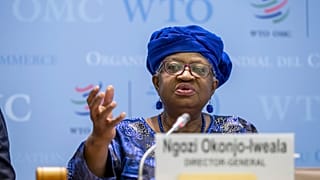
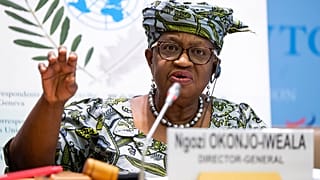
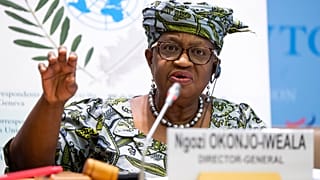
Before the Yaounde meeting, WTO Director-General Ngozi Okonjo-Iweala had called for it to mark a "turning point", and to "launch the next chapter of the multilateral trading system".
But Sebastien Jean, an associate director at the French Institute of International Relations think tank labelled her comments as a "dramatisation, typical before this type of negotiation".
The global trade body carefully avoided characterising Yaounde as a "failure", highlighting that discussions on various subjects would continue in Geneva, where it is headquartered.
Hamid Mamdouh, a former high-level WTO official, told AFP that the Yaounde "no result" might be preferable to a "bad result, ... an empty agreement... that masks the harsh reality facing the multilateral system".
"The system has broken down," he said, stressing that "the 166 members of the WTO no longer want the same thing."
The global trade body's routine functions, including monitoring and implementation of technical agreements, continue to operate, with more than 70 percent of world trade still conducted under WTO rules.
But in Yaounde, tensions were palpable from the start, especially on the issue of e-commerce.
A repeatedly-renewed moratorium that has exempted everything digital, from e-books and music to telemedicine, from customs duties, is seen as highly important for developed countries.
The United States had even been pushing for the moratorium to be made permanent, something many developing countries -- India chief among them -- have balked at over fear of losing tax revenues.
New Delhi and Washington finally appeared to reach an agreement, calling for a compromise extension of five years.
But prospects for a deal evaporated Sunday when Brazil intervened at the last minute, blocking the text to protest the lack of progress in separate talks on agriculture.
"We see Members defending a moratorium in the application of import duties on electronic transmissions while maintaining agricultural duties as high as possible," Brazilian Foreign Minister Mauro Vieira charged in a statement.
'Maximalist' Washington
Delegates and experts also denounced Washington's "maximalist" stance.
"The US arrived with hard red lines, ... without apparently trying for any compromise," said Peter Ungphakorn, a former WTO spokesman who remains a keen observer of the inner workings of the organisation.
India, regularly accused of obstructing WTO negotiations, this time "sat back while the US and Brazil fought it out over the e-commerce moratorium", he told AFP.
Observers said the Yaounde upset illustrates the political gridlock between major trading powers.
"The conference reflected the state of international trade, marked by very high tensions emanating from the United States, while China advances its interests less visibly but very powerfully, and other countries are on the defensive, trying to protect their interests," Jean said.
Mamdouh said the shakeup would have a lasting impact.
"It should be clear now that there is no going back to business as usual in the WTO."


01:17
Taiwan skips WTO meeting after Cameroon labels it ‘Province of China’
01:04
Madagascar's interim leadership strengthens cooperation with Russia
01:14
French FM and UN peacekeeping chief discuss CAR peace initiatives
02:20
Israel partnership sparks hope as drought ravages Somaliland farms
00:14
Ethiopia's President Selassie welcomes Israel's President Herzog for talks on strengthening ties
01:09
Pope Leo XIV to make historic Africa tour of four nations in April