



Nigeria
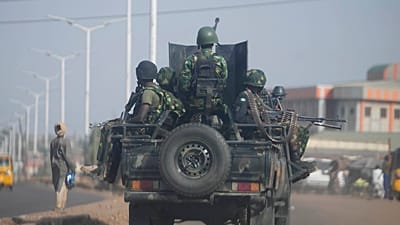
The Nigerian air force will take over from the United States after Washington's Christmas Day strikes against jihadists, relying on American reconnaissance flights to support its own operations, a Nigerian official told AFP on Tuesday.
On Christmas night, the United States struck sites in Sokoto State, in northwestern Nigeria , against what they described as targets linked to the Islamic State group .
Although Nigeria remains open to further US strikes, the primary role of the United States will now be to provide intelligence, the source indicated, familiar with the new security agreement with Washington.
Africa's most populous country has been battling a jihadist insurgency since 2009, mainly concentrated in the northeast, while armed gangs known as "bandits" have gained a foothold in vast rural areas of the northwest and north-central parts of the country.
These strikes came after a diplomatic offensive that began in October, during which President Donald Trump claimed that the violence perpetrated by armed groups in Nigeria amounted to "persecution" and "genocide" of Christians — accusations rejected by Abuja and independent analysts.
Partnership
A few days before the strikes, the Nigerian Minister of Information had declared that the "dispute" had been resolved, "resulting in a strengthened partnership between America and Nigeria" .
For several weeks prior to the strikes, analysts had observed an intensification of US reconnaissance flights over Nigeria. These flights have continued since.
The New York Times , citing Pentagon officials speaking on condition of anonymity, recently reported that the US strikes were a "one-off event" .
Although they took place after Nigeria and the United States had at least partially buried the hatchet, these strikes caused headaches in Abuja when Trump unilaterally claimed credit for them.
In response, Nigerian Foreign Minister Yusuf Tuggar launched a media offensive, claiming it was a joint operation .
To further complicate matters, US officials remained largely unreachable until days before the strikes, before finally calling their Nigerian counterparts to present their plans, according to the source.
Islamic State
According to Abuja, the strikes targeted Islamic State militants present in the country to collaborate with the Lakurawa jihadist group and gangs of "bandits" .
All three groups were targeted, said presidential spokesman Daniel Bwala. Both countries reported that an unspecified number of fighters were killed.
A hotel manager in Offa, Kwara State, told AFP that three of his employees were hospitalized after munitions debris fell on his building.
Some researchers have recently established a link between certain members of Lakurawa —the main jihadist group based in Sokoto State—and the Islamic State's Sahelian Province (ISSP), active in neighboring Niger, near the Nigerian border. Other analysts, however, dispute the existence of these links.

01:01
Vermont business owner reacts to Supreme Court decision striking down Trump’s tariffs
02:12
Somaliland offers US access to minerals as it pushes for recognition
00:59
Iran says it will not bow to pressure from United States over nuclear deal
01:45
Trump imposes new 10% tariffs following Supreme Court ruling
01:10
US Supreme Court strikes down Trump global tariffs
01:09
Donald Trump's 'Board of Peace' pledges $7 billion to rebuild Gaza