



Coup
West African leaders have rejected a transition programme announced by Guinea-Bissau’s military rulers, calling instead for a swift return to constitutional order and warning of targeted sanctions against those obstructing the process.
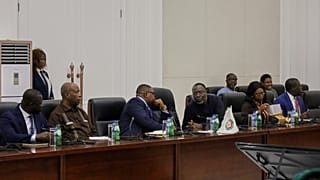
The position was reaffirmed on Sunday in Nigeria’s capital, Abuja, where heads of state and government met for the 68th summit of the Economic Community of West African States, ECOWAS, amid growing concerns over insecurity, economic pressures and political instability across the region.
Opening the summit, ECOWAS Commission Chairman and Sierra Leone’s President, Julius Maada Bio, warned that the resurgence of unconstitutional changes of government continues to pose a serious threat to regional stability.
“The architects of ECOWAS understood that democracy is inseparable from peace, justice and development,” Bio said. “Today, that democratic order is being tested. The resurgence of unconstitutional changes of government threatens our regional stability, undermines our citizens' rights, and weakens our collective future.”
He pointed to the ongoing instability in Guinea-Bissau and an attempted coup in Benin as reminders that democracy in the region requires constant vigilance and principled action.
Nigeria’s Vice President, Kashim Shettima, representing President Bola Tinubu, urged leaders to reaffirm their commitment to regional solidarity, stressing that West Africa’s unity goes beyond political disagreements.
“West Africa is not a random assemblage of borders drawn by chance. It is a family bound by memory, culture, struggle, and aspiration,” Shettima said. “We disagree, we contest ideas, and we test one another’s patience. But disagreement does not erase belonging.”
He added that Nigeria believes dialogue and fraternity — rather than force — must define the future of the regional bloc.
Beyond political tensions, leaders reviewed progress on economic integration, including the ECOWAS Trade Liberalization Scheme, energy cooperation and major infrastructure projects. Discussions also focused on the impact of climate change on food security, with calls for coordinated regional responses to recurring floods and droughts.
The summit comes as ECOWAS continues negotiations with several military-led governments that have either withdrawn from or suspended their participation in the bloc — developments that have raised questions about the future of regional unity and cooperation.
Founded in 1975, ECOWAS comprises 15 member states and was established to promote economic integration, peace and political stability across West Africa.

01:06
ECOWAS troops deployed as Benin foils coup attempt
01:00
Pix of the Day December 12, 2025
00:44
ECOWAS to cut air transport taxes in bid to lower cost of air travel in West Africa
01:03
Alleged leader of Benin coup attempt reportedly finds refuge in Togo
01:00
Videos. Pix of the Day: December 10, 2025
01:52
Nigeria: Abducted schoolchildren reunite with families as over 150 remain captive