



Sudan
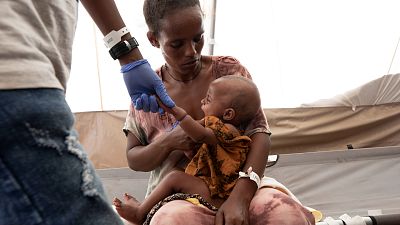
In war-ravaged Khartoum, midwives like Hawaa Ismael are risking their lives to deliver babies and care for mothers despite Sudan’s crumbling health care system.
With fewer than 25% of medical facilities still functioning due to the ongoing conflict, pregnant women are forced to walk for hours, or even days, to find care. Some never make it in time. "The hardest case I faced was delivering a woman in a car," says Ismael, a midwife at the UNFPA-supported Karari Health Centre. "We were stuck. She had complications. I’ve cried many times especially when women camn’t reach us.”
Since fighting erupted, over 750,000 people have received reproductive health services in Sudan, according to the United Nations Population Fund (UNFPA). Yet recent funding cuts threaten to leave nearly half a million women in Sudan and neighboring countries without maternal or gender-based violence support services.
Despite the danger, Ismael continues to deliver up to four babies a day. She visits homes, crossing frontlines in what she calls a mission of necessity: "We examine pregnant women, guide them, and do monthly follow-ups."
The war has displaced over 13 million people and claimed at least 24,000 lives. Human rights organizations say the conflict, marked by famine, mass rape, and ethnic violence, has created one of the world’s worst humanitarian disasters.
For women in Sudan, midwives are often their only lifeline.




02:13
Pressure to have baby boys outweighs Congolese women's health concerns
00:57
Sudan recalls ambassador to Ethiopia amid rising tensions
01:13
Sudan accuses UAE, Ethiopia of Khartoum airport drone strikes
01:55
Sudan's Tuti Island is recovering from nearly two years of paramilitary siege
02:20
Loyal groundskeepers guard Sudan's ancient Nubian pyramids
02:24
Unexploded landmines a hidden threat for residents in Sudanese capital