



Democratic Republic Of Congo
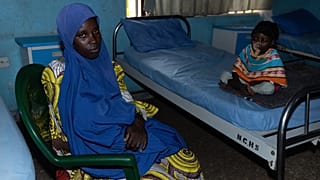
The Mpox outbreak continues to spread in eastern Democratic Republic of Congo, leaving patients at a clinic in Kamituga anxiously awaiting vaccines.
The official in charge of the response to the Mpox outbreak in the Democratic Republic of Congo announced on Wednesday that the country is set to receive its first shipment of Mpox vaccine doses on Thursday, followed by a second shipment on Saturday.
There are disturbing images of people suffering, with some lying in pain and covered in lesions and Richard Songa is one of them.
“I arrived here in a very critical condition. I had already lost hope because I did not know if I was going to survive, but now I see a change and I am starting to heal. The Mpox was all over my body, and I was not eating...,” he said.
As Richard begins to heal, he looks at a picture on his cell phone of his condition prior to his time at the clinic.
He states, "If there is a vaccine it is important to have it because this disease is very dangerous and risks killing people. Personally, if I had not come here to Alima hospital I would have died. If there is a vaccine that can prevent this disease it is important to have it ...”
Fiston Nepa, a doctor at the Alima clinic, stated, "The majority of our patients are adults. This is because we identified clade 1b early on, which spreads more readily through sexual contact. Sexual activity occurs among adults, not children."
For weeks, Congo has been awaiting shipments of the Mpox vaccine, with the first batch set to arrive in Kinshasa on Thursday, a considerable distance from the eastern Congo hotspot.
The recent outbreak led to a global emergency declaration by the World Health Organization on August 14.
In Congo, there have been over 18,000 suspected cases and 629 fatalities.
Mpox, or Monkeypox, is related to Smallpox but usually presents with milder symptoms such as fever, headaches, and body aches.
In more severe instances, individuals may experience painful sores and blisters on the face, chest, hands, and genitals.
The virus is primarily transmitted through close skin-to-skin contact.
The WHO has estimated that around 230,000 vaccines could be dispatched "imminently" to Congo and other affected areas.
Additionally, the organization is developing educational campaigns to inform people on how to prevent the spread of mpox in regions experiencing outbreaks.




Go to video
Fairer vaccine sharing could save millions in next pandemic, study finds
10:00
Cameroon: Thousands flee the Far North after Boko Haram attack [Africanews Today]
01:41
Congo launches Ebola vaccination campaign for frontline workers
01:34
UN envoy visits displaced communities in eastern DR Congo
01:21
Medical teams in DRC face difficult conditions as the race to contain Ebola outbreak
01:44
Ebola treatment center welcomes community to visit in bid to build trust