



Morocco
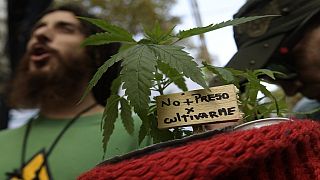
Moroccan farmer Mohamed Morabet is hoping to come out of the dark and sell his hashish his summer on the open market as Morocco plans to legalise cannabis for medical use.
The government of the world's top hashish-producing nation last month ratified a draft bill to legalise its medical use, and parliament is expected to debate the legislation this week.
According to a report released last year by the United Nations Office on Drugs and Crime (UNODC), Morocco is the world's biggest producer of cannabis resin, or hashish.
"We agree with the legalization (of cannabis) because we will finally come out of clandestinity and we will be able to hold our heads high when the inhabitants mobilize in the form of cannabis production cooperatives," said Morabet.
"However, despite this situation, the inhabitants are reluctant."
Some are worried they won't make as big a profit.
"If the legalisation is in our interest for example with the sale price, it will be good because we will no longer have any problems, but if the price they offer us is not a good rate, we will all lose out," said farmer Fadoul Azouz.
**Profit in a legal market **
But authorities and experts say these fears are baseless and Morocco could become a global leader in the market.
Officials estimate that farmers could make a 12 percent profit in a "legal market" compared to four percent now.
The interior ministry is expected to designate cultivation areas and farmers are hoping it'll be in their regions, where they have been working for decades.
"We ask for the installation of factories here in these regions so the young people and locals can work internationally, in the so-called historical areas of cannabis cultivation: Béni Sdet, Ketama and Béni Khaled," said Morabet.
The interior ministry is also expected, once the bill becomes law, to call on farmers to set up a "cooperative" to sell their crop to a "public agency".
In 2019, about 55,000 hectares (136,000 acres) of land in Rif were used to grow hashish, according to official figures, compared to 134,000 hectares in 2003.
The northern Rif is a marginalised region rocked by social unrest in 2016-2017.
Farmers like 25-year-old Said Yarou, who works on a family plantation, hope legalisation will create jobs for unemployed youths.
Cannabis has been banned in Morocco since 1954 but has been tolerated as cultivation provides a livelihood for up to 120,000 families.
Cannabis output in the North African country was estimated to total more than 700 tonnes in a study last year by the Global Initiative against Transnational Organised Crime.
That same year more than 217 tonnes of cannabis were seized by authorities, according to official figures.




02:20
Threads of fragility: Moroccan artist transforms Tangier museum
01:29
Moroccan lawyers extend strike over profession law
01:17
Morocco kicks off legislative election campaign with 27 political parties vying for 395 seats
01:06
WFP says Ebola response in Congo must include food aid
01:46
Spanish PM defends handling of Ceuta crisis, refuses to pin Morocco
01:29
Madrid pledges €306 million in additional aid for Ceuta