



Nepal
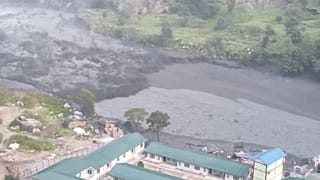
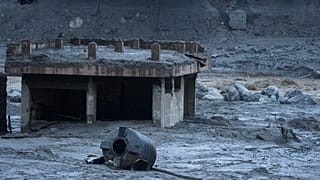
Rescue teams continued searching for survivors on Thursday, a day after catastrophic floods and mud swept through several communities along the Nepal-China border.
More than 1,000 people are still missing after a wall of ice, mud, and rock collapsed into a mountain river, triggering the flash flood.
Over 350 people have been killed and at least 700 foreign tourists are among those unaccounted for.
The Nepalese army has rescued more than 100 people from flood-affected areas through helicopter operations on Thursday morning.
Dozens of injured people have been transported to Kathmandu for advanced medical care.
Local resident, Jaleshwar Kumar Sahni, said he was warned about the flooding in a phone call from a relative on Wednesday morning.
“I got a call .. saying that a lot of water is flowing through there, leave your shops and run, the shops will not survive,” he said.
Experts says the disaster appears to be have triggered by the collapse of a glacier in the mountainous area close to the Nepal-Tibet border, adding that there is a risk of more floods.
The US Geological Survey first reported a magnitude 4.4 earthquake early Wednesday, about 66 kilometres north of Kathmandu, near the border.
It later updated its analysis to say the seismic event it measured was a magnitude 5.2 glacier collapse that sent debris flowing downstream with catastrophic impact on communities.
It said its determination was based on data from nearby seismic stations, long period seismic waves, and satellite imagery, and that no earthquake had occurred.
Nepalese officials say dozens of bridges were destroyed and nearly 40 kilometres of roads were damaged, complicating search efforts.
Rescuers are using helicopters to find survivors and drop food and other emergency supplies to people cut off in towns and valleys.
This latest disaster in Nepal and Tibet is not a once-off event.
The increasingly unstable Himalayan ice system threatens communities, infrastructure, and water supplies across one of the world’s most densely populated regions.
The region saw similar flash floods in August 2025, when a glacial lake in Tibet overflowed because of high temperatures.
Nine people were killed, and critical infrastructure, including a bridge connecting Nepal and China, was damaged.





01:00
Panic in Panama as 7.7 quake hits, cathedral collapses and tsunami warnings spread
00:45
South African human rights lawyer wins 2026 Nobel Peace Prize
01:00
Chile: Santiago flooding turns streets to rivers as Kast declares state of catastrophe
01:00
Deadly floods sweep Albania and Montenegro as rivers burst banks
Go to video
Nigeria: 20 kidnapped graduates rescued after week-long search
01:43
Yemen: Residents of Taiz fear food supply shortages amidst the siege