



Spain
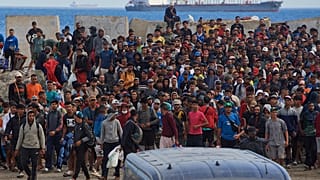
One week on, the Spanish enclave of Ceuta is still reeling from the influx of tens of thousands of migrants from across its border with Morocco.
Although most of about 80,000 people who swarmed into the tiny North African territory have gone back, it is estimated that 3,000 to 5,000 remain, including unaccompanied minors.
But those who are not Moroccan, have no desire to return there, including Ahmad who comes from Yemen.
"We want to enter Europe to earn a living for the sake of our families and children. We don't want to return to any other place,” he said. “We don't want to go back to Africa again.”
For Mohamed Ahmed Malek, a migrant from Darfur in Sudan, making it to mainland Spain will make his life better as he wants to become “the best doctor”.
"I left Sudan for a great goal, to help my family, father, and siblings," he said.
Saif Hibbane has travelled to Ceuta all the way from the Comoros, an archipelago off Africa’s south-eastern coast more than 7,000 kilometres away.
"We left our country because we were living through a political war there. People are dying every day, as the country is ruled by a dictatorship,” he said.
The head of Ceuta’s local government, Juan Jesus Vivas, told European lawmakers on Thursday that the influx has led to a humanitarian emergency of enormous proportions.
He called on the Spanish national authorities to take measures to restore “normality” including the expulsion of the remaining migrants.
Although there are several theories, it is still not clear what exactly led to the deadly mass border crossing.
As migrants stuck in Ceuta continue hoping they will make it to mainland Europe, the influx crisis has created tensions among EU nations who share open borders.






Go to video
Ceuta: Madrid takes preventie measures amid migration calls
02:17
Morocco: Youth vote in focus ahead of first parliamentary elections since Gen Z protests
00:57
Ceuta: Tense scenes as police move migrants to temporary camp
01:05
Mbappé explains decision to cover Ceuta solidarity message
01:15
Spain says more than 5,300 migrants have left Ceuta for Morocco
01:06
UK: Anti-immigrant and anti-racism protesters face off in Portsmouth