



Cuba
A 20-minute burst of electricity is a small miracle in Havana nowadays — and it sometimes comes at 3 a.m.
That's when 72-year-old Leidis Rodríguez frantically cooked beans after the lights switched on following hours of uninterrupted blackouts.
In the wake of sometimes dayslong blackouts in Cuba — fueled by the oil blockade imposed by the Trump administration in January — Cubans are planning their lives around the lights turning back on.
Those small bursts of relief last a few minutes or a few hours. They come at any time, day or night. Increasingly, the lights flick back on when Rodríguez and her 41-year-old daughter Yaimara Matos would normally be asleep.
When the power comes on, the family stops everything they are doing.
“You want to do everything at the same time — wash clothes, iron, cook, tidy the rooms, because it’s impossible in the dark, and even get a little relief from the heat," Matos said. “What we used to do in 10 hours, we now have to do in two.”
That’s the case for Cubans across the island, whose lives have been transformed by one of the worst crises the island has seen since the Cuban revolution. Daily life has turned into a tangle of compounding crises families have to unravel.
Public transportation and cultural events have come to a standstill. So has tourism, the country's economic engine, especially as tourism companies have withdrawn, leaving 25,000 hospitality jobs vacant. Flights to the island are regularly cancelled and workdays have been shortened to adjust to the new reality of a Cuba without power. Medicine shortages have worsened and food rots in fridges without power.
Power outages are nothing new to the Caribbean nation. Endemic blackouts began to worsen five years ago as a result of a crumbling energy grid, decades-long U.S. sanctions and failed economic reforms by the communist-run government.
But the quality of life began to rapidly deteriorate when President Donald Trump threatened to impose a tariff on any goods from countries that sell or provide it with oil, Cuba's main source of power. The move, combined with even more rigid sanctions, were aimed pressuring Cuba's government into political change. The worst effects have been felt by average Cubans.
Previously, most blackouts were scheduled by the government to save power, so each family knew how long they would be without electricity — usually two or three hours. Now there is no longer any predictability: an outage can last 12 hours, 30 hours or longer. Increasingly, the entire island goes dark. Last weekend's grid collapse marked the sixth time this year.
Cubans like Rodríguez and Matos, long accustomed to adapting to crisis, have found their own ways to cope. The family bought a small household power generator, which they're only able to run a few hours a day.
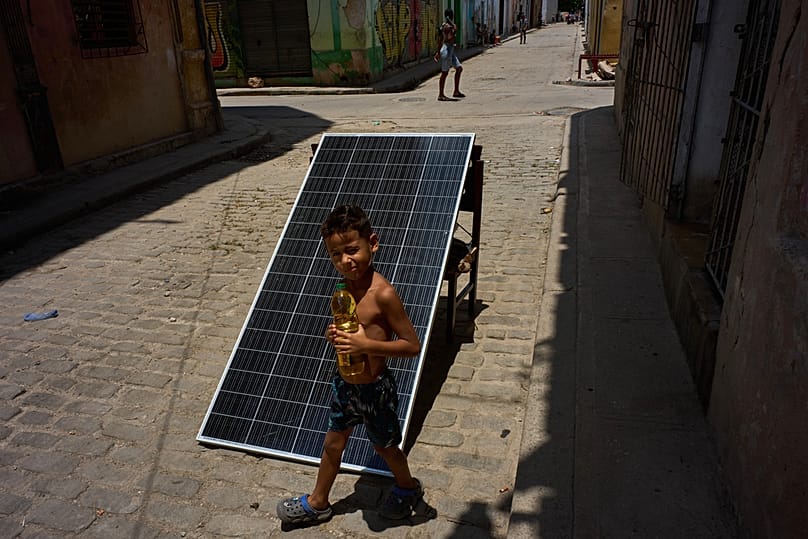
At 9 p.m. one night earlier this week, Matos used the generator, which roared over her as she spoke, to pump water and turn on her washing machine. Some install solar panels – often sent by relatives abroad. Others purchase rechargeable fans or solar-powered vehicles, since gasoline is also unavailable.
Lianet Barroso, once cooked with a gas stove. Now, she cooks over a wood fire. Unsure of when she will next get water, when then power does go on, she fills up as many plastic bottles as she can.
"The life of Cubans has become difficult, hard, and sad,” she said.
In several municipalities, particularly in Havana, residents staged neighborhood protests after blackouts lasting more than 48 hours, banging pots and pans and burning garbage piled up on street corners. Meanwhile, inflation and the price of of the dollar have surged, leaving many people struggling to even pay for the chicken that could later go bad in a blackout.
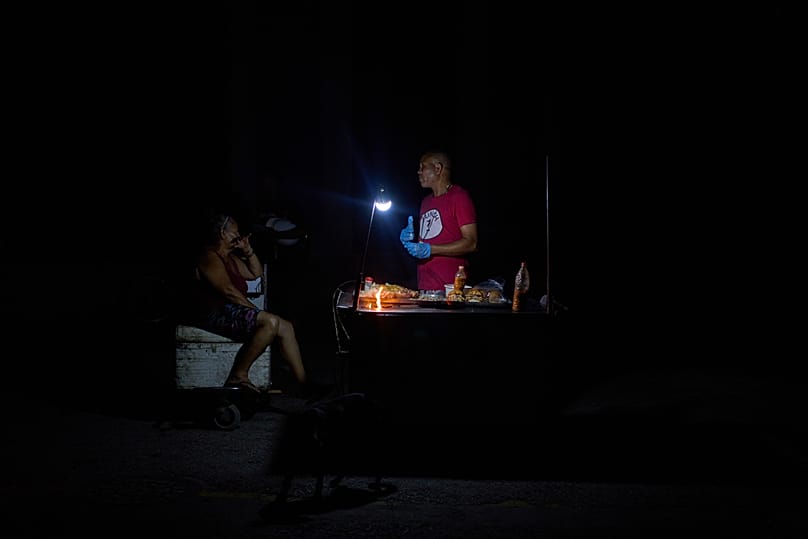
At 10 p.m., 64-year-old engineer Caridad Delgado was preparing food for her cat during a blackout under the light of a rechargeable lamp, something the family could afford because of remittances from her three children who had migrated from the island.
“At this hour I would have been watching a soap opera on TV. Now, not even in my dreams," Delgado said.


01:06
Iran says Strait of Hormuz will stay blocked despite Trump’s claim of ‘total control’
00:49
Kenya restores electricity after major power outage
02:25
How the Strait of Hormuz is monitored as US and Iran escalate attacks
00:54
Mali: Water returns to Bamako after sabotage disrupts power supply
01:08
Trump comments spark speculation about his intentions towards Cuba
01:47
US escalates pressure on Cuba with indictment of former president Raúl Castro on criminal charges