



Democratic Republic Of Congo
A recent Ebola outbreak has killed more than a hundred people in Congo, and experts say there’s no vaccine for this strain. A vaccine exists for the more common Zaire strain, but the current outbreak is the Bundibugyo strain.
Nita Bharti, associate professor of biology at Penn State, studies Ebola and says the death toll is probably much higher than we currently believe because it took longer to identify the outbreak and that allowed it to spread faster. Bharti explains what Ebola is and how scientists are trying to contain the spread.
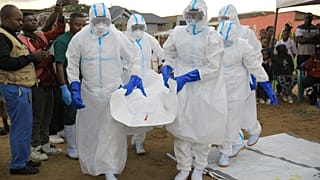
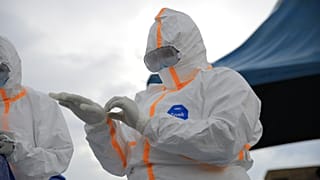
Ebola is highly contagious and can be contracted via bodily fluids such as vomit, blood or semen. The disease it causes is rare but severe and often fatal. Healthcare workers and family members caring for sick patients face the highest risk, experts said.
It can be difficult to identify Ebola at first because early symptoms mimic those of common diseases such as malaria or flu.
While some species in the Ebola family have vaccines, some do not. According the the CDC, there are four species that cause illness in people.
"Typically for Ebola, there would first and foremost would be a vaccine," said Susan Michaels-Strasser at ICAP, the global health center at Columbia University. "The other things are what we call supportive care. So making sure that the people with Ebola have fluids."





02:00
Ebola: Sharp jump in cases in North Kivu while outbreak slows in Ituri
02:47
KoBold Metals uses AI to search for critical minerals in Congo
01:06
DR Congo confirms Ebola cases surpass 7,600 with 3,699 deaths
01:41
Congo launches Ebola vaccination campaign for frontline workers
01:34
UN envoy visits displaced communities in eastern DR Congo
01:13
DRC: OCHA helps with response endeavours amid ebola outbreak