


Business Africa

A growing movement is reshaping the way Africa is perceived internationally. “Narrative sovereignty”—the right of countries to define and defend their own stories—is quickly becoming one of the continent’s most strategic economic assets.
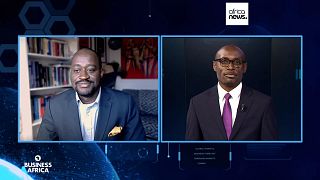
For decades, external narratives have often overshadowed Africa’s realities, affecting investment flows, diplomatic influence, and even public morale. Today, experts like Dorothea Hodge, Founding Director of Aequitas Global, are helping African nations close the gap between perception and reality, unlocking new channels for respect, partnerships, and growth.
In an exclusive conversation, Hodge reflects on Africa’s evolving battle for narrative power.
Her insights come at a time when African creators, policymakers, and diasporan advocates are reshaping how the world sees Africa—not as a peripheral player, but as a global driver of innovation, culture, and economic opportunity.
Solar Power Surge: Africa’s Green Jobs Boom
Africa is fast becoming one of the world’s most promising hubs for solar energy employment. Jobs in the sector are projected to grow by 23%, driven by rising investment and the meteoric expansion of off-grid and mini-grid solutions.
From Nigeria to Kenya to South Africa, young people are stepping into roles as solar technicians, engineers, and entrepreneurs—supporting one of the fastest-growing clean-energy markets in the world.
The solar boom is not just about powering homes and industries; it is fueling economic inclusion. Off-grid solutions, in particular, are transforming rural areas where electricity access has historically been limited. As private-sector activity accelerates, the continent is positioning itself as a global leader in decentralized renewable energy systems.
The AI Revolution: Africa’s $16.5 Billion Opportunity
Artificial Intelligence is rapidly gaining traction across Africa, with the market projected to soar to $16.5 billion by 2030, according to Mastercard. From fintech to agriculture, health to education, AI-driven solutions are reshaping African economies.
But experts caution that the digital divide could widen if infrastructure, digital literacy, and equitable access do not keep pace. While some nations are making strong advances in data governance, innovation ecosystems, and AI talent development, others risk falling behind.
The stakes are high: AI could enable Africa to leapfrog several stages of development—or deepen existing inequalities if not deployed inclusively.
As investment grows and innovation hubs flourish, the next five years will be crucial in determining how widely and equitably AI’s benefits are shared across the continent.
![Egypt: Tourism holds strong despite regional tensions [Business Africa]](https://images.euronews.com/articles/stories/09/65/71/76/320x180_cmsv2_dcc5e23e-e0d9-5b5a-94a8-6160522ac5c4-9657176.jpg)
![Africa forges a trade future beyond AGOA [Business Africa]](https://images.euronews.com/articles/stories/09/64/42/29/320x180_cmsv2_536479be-0c6e-53b6-861a-65ff2db0f40e-9644229.jpg)


00:53
Gabon asks IMF for new arrangement in a bid to stabilise finances
02:12
Ivory Coast: women tap into financial freedom through rubber tree farms
00:50
IMF expects talks with Zambia on new financial package to start in April
02:10
Iran war oil price shock threatens to disrupt African economies
01:46
Ivory Coast cocoa growers to face 60% price cut on their produce
01:00
Spain: From AI assistants to humanoid robots, 5G dominates MWC Barcelona