



United Nations
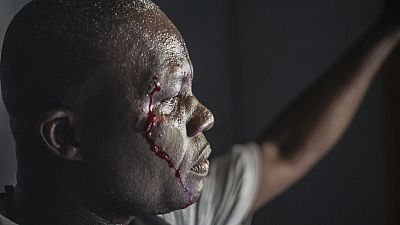
Gangs in Haiti could overrun the capital, Port-au-Prince, leading to a complete breakdown of government authority without additional international support for the beleaguered national police, the United Nations chief warned.
Secretary-General Antonio Guterres said in a report released to coincide with a Security Council meeting Wednesday on the deteriorating situation in the Western Hemisphere’s poorest country that “time is of the essence.”
Further delays in providing the police with additional officers for the multinational force trying to curb gang violence or additional assistance “carry the risk of a catastrophic collapse of national security institutions,” he said.
“This could allow the gangs to overrun the entire metropolitan area, resulting in a complete breakdown of state authority and rendering international operations, including those to support communities in need, in the country untenable,” Guterres said.
He told the Security Council: “We must urgently do everything in our power to prevent such an outcome.”
Kenya is leading the multinational police force, and 217 additional officers arrived over the weekend, bringing its total deployment to more than 600, below the 1,000 officers the country's president pledged. An additional 150 Guatemalans and an advance team of eight Salvadorean troops have also arrived, but the force remains far below its anticipated strength of 2,500 officers.
The power of gangs in Haiti has grown since the 2021 assassination of President Jovenel Moïse.
More than 5,600 people were reported killed across Haiti last year, according to the United Nations. The number of killings increased by more than 20% compared with all of 2023, according to the U.N. Human Rights Office.
Maria Isabel Salvador, the U.N. special envoy for Haiti, told the Security Council gang violence has forced more than 1 million Haitians to flee their homes, with many crowding into makeshift and unsanitary shelters after gunmen razed their homes.
The humanitarian crisis in Haiti has reached “alarming levels,” she said, with nearly 2 million people facing emergency levels of food insecurity and 6,000 in catastrophic conditions facing starvation.
Haiti’s leaders have asked for a U.N. peacekeeping force to replace the multinational force, and the permanent council of the Organization of American States, the United States and dozens of other nations have supported the request. The multinational force is funded by a trust fund, which has only $101.1 million in pledges, while a U.N. force would be funded from the U.N. peacekeeping budget.
Guterres is preparing options for the U.N.'s future role in Haiti.
Haiti's Foreign Minister Jean-Victor Harvel Jean Baptiste told the council that a U.N. peacekeeping mission was crucial. Echoing Guterres, he said gang violence, massacres and kidnappings pose “an existential threat” to the safety and security of Haitians — and threaten “the very survival of our state.”
Guterres said he is “appalled at the brutality and scale of the violence” committed by the gangs, citing reports of sexual violence, including collective rape and recruitment of children.
“Setbacks in the political process have contributed to a climate in which these atrocities have become possible,” he said.
Guterres said the transition roadmap that began after Moise’s assassination “has been worryingly slow.”
“Simply put, the goal of restoring democratic institutions by February 2026 is in jeopardy,” the U.N. chief said.
00:50
UN agencies appeal for help to protect weakest nations from super El Niño
11:06
Illegal gold mining: Who profits from Africa’s gold smuggling? [Business Africa]
02:00
'This war must end': UN and Swiss officials hold talks on Sudan conflict
02:39
Is Macky Sall preparing for a political comeback in Senegal?
00:59
United Nations condemns drone strikes on civilians and infrastructure in Sudan
01:35
Haitian gangs target foreign troops in biggest attack on new force