



Sudan
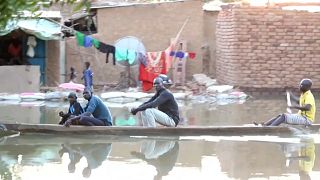
Flash floods triggered by heavy monsoon rains continue to wreak havoc across much of Sudan.
Essential infrastructure have been damaged, increasing the risk of waterborne diseases such as cholera.
The deadly floods have also destroyed tens of thousands of homes, boreholes and agricultural fields over the past months.
In South Darfur, a community was left to count the cost.
"The water came inside the house, it broke everything and now I have many cracks in the walls, all my beds are broken," said Muadah Ali Mohammed, a resident of Um Zaiedd village.
Murtada Adam Fadul, the South Darfur branch director of the South Sudan Red Crescent, said this rainy season had been exceptional.
The downpours, which began earlier than normal this year, have affected at least 258,000 people, wrecked many villages and left tens of thousands of acres of land flooded in 15 of Sudan's 18 provinces, according to the United Nations.
Sudan's rainy season usually starts in June and lasts until the end of September, with floods peaking in August and September.
The western Darfur region and the provinces of Nile River, White Nile, West Kordofan and South Kordofan are among the hardest hit areas, according to the UN Office for the Coordination of Humanitarian Affairs.
The International Committee of the Red Cross (ICRC) plans to provide essential households items and cash to some 45,600 people by the end of October.
The organization is also working to improve access to clean water for 30,000 people, 70% of whom are women and children.


01:15
Sudan: Life slowly resuming in the capital despite fears of another attack
01:30
MINUSCA steps up security after attack on northern CAR base
02:04
In Sudan's Kordofan, a key city reels as paramilitary offensive looms
01:00
Ukraine: Zaporizhzhia ablaze after Russian missile and drone attack leaves at least nine hurt
02:00
Venezuela earthquakes: bodies recovered as rescue efforts continue in La Guaira
01:00
La Guaira, Venezuela’s port city, shows extensive earthquake damage after the quake