



Accident
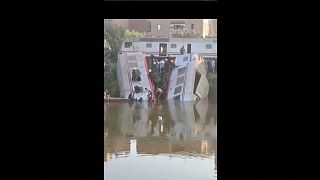
Two trains collided south of the Egyptian capital on Sunday, derailing several carriages, killing four and injuring dozens, according to the authorities.
Egypt's railway authority said a train travelling from Giza to Fayoum crashed into the rear of another service heading south from Cairo to the city of Aswan.
The health ministry said an initial count put the toll from the crash at four passengers killed, with 88 others currently being treated for injuries in hospitals around the Giza area.
State-owned media had earlier reported 120 people were wounded, without clarifying the degree of injury.
President Abdel Fattah al-Sisi said he was following the accident "with great concern", and had directed authorities to conduct an urgent investigation to "hold accountable anyone found to have been negligent".
Emergency crews used cranes to remove the wreckage, the authority said.
Authorities said they had launched an investigation into the cause of the crash, which occurred in Giza's Al-Ayyat area, the site of Egypt's worst-ever rail disaster.
In 2002, more than 370 people were killed when a fire swept through a train carrying holiday travellers south of Cairo.
In 2009, multiple train crashes in the area killed dozens.
Egypt's 110 million people depend heavily on rail transport, but the network -- one of the largest in Africa -- has suffered repeated deadly accidents.
Over the past decade, Egypt has poured billions of dollars into updating its transport infrastructure, including new highways and high-speed rail lines, but has yet to overhaul much of its ageing rail network.



01:10
Egypt reopens embassy in Libya as it seeks to rebuild energy ties with Tripoli
01:45
Dakar 2026: China tops medal count as South Africa, Egypt win gold
01:22
Egypt-US sign $625 framework agreement aimed at advancing mutual prosperity
01:13
El-Sayed victory draws mixed response in Egypt over criticism of Cairo
00:52
Tenerife footballer Jesús De Miguel dies aged 30 after match collision
01:24
Egypt: 104th anniversary of the discovery of King Tutankhamun's tomb