



South Africa
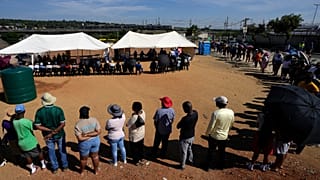
Partial results for South Africa's local elections point to coalition battles in several major cities.
The once-dominant African National Congress (ANC) is set to lose significant voter support, with nearly 31% of the votes out of 90% counted.
While still the largest party in South Africa, the ANC is set to fail to win an outright majority in any of the eight major metros, including Johannesburg and Pretoria.
Its support has steadily eroded as voters grow increasingly frustrated with corruption and the party's failure to tackle unemployment, which tops 34% more than three decades after the end of apartheid.
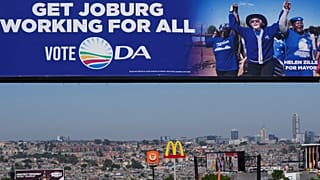
The second-largest party, the centre-right Democratic Alliance (DA), has gained ground, winning around a quarter of the vote, but remains short of the support it attracted at its 2016 peak.
The party has pulled ahead in several urban contests, including Johannesburg, where its mayoral candidate is 75-year-old Helen Zille, a veteran ANC critic who built her political career in Cape Town.
Complex coalition negotiations
Led by former president Jacob Zuma — a graft-tainted former ANC stalwart — the uMkhonto weSizwe (MK) is contesting the municipal election for the first time since its formation in 2023.
It is set to finish third nationally, overtaking the radical-left Economic Freedom Fighters of Julius Malema, another former ANC star.
MK has been the biggest beneficiary of the fragmentation of the ANC vote, analysts said.
With outright majorities elusive in several major cities, the results will usher in complex coalition negotiations as parties bargain to assemble the alliances needed to govern.
Such marriages of convenience have often proved unstable, leaving local administrations consumed by internal wrangling at the expense of basic service delivery.
The national government's existing coalition arrangements could further complicate negotiations, political analyst Daniel Silke told AFP.
Voters in Gauteng province, which includes Johannesburg and the capital Pretoria, would probably prefer to see the DA govern alongside centre-right ActionSA, he said.
"But the animosity between those two parties is extreme."
An estimated 54.5 percent of the country's 29.2 million registered voters cast ballots, the electoral commission said, up from 46 percent in 2021. Final results are expected on Sunday.



01:34
Tanzanian opposition celebrates 'victorious' day after leader avoids death penalty
01:33
Political chaos in Somalia after court ruling against president's term extension
01:12
Nigerian court nullifies Atiku Abubakar's presidential candidacy
01:00
Pix of the Day, 4th November, 2026 - Across the world
00:56
South Africans vote amid growing discontent over failing services and infrastructure
01:22
UN peacekeeping head meets leaders of rebel coalition in eastern DRC