



Democratic Republic Of Congo
When Zawadi Kavira Musubao’s older sister died suddenly in August, a traditional medicine clinic told the family she had been poisoned. Musubao, 27, fell ill during the funeral and was also told she had been poisoned.
A pastor offered a different explanation, saying “evil spirits” in the family’s toilets were spreading disease. Hoping to stop whatever was making them sick, the family threw hot ashes into the latrine. The pastor soon died. The family then turned to a traditional healer, who prepared a potion for them.
But their condition only worsened. The story is a familiar one in eastern Congo’s Ebola outbreak, where misinformation is rife and communities long neglected by the central government in Kinshasa are wary of authorities. Just days after Musubao’s sister died, her father died too.
That was when her brother intervened and took the family members to the hospital, she said. “At first, we refused. We told him that people who went there never came out alive.” Musubao nearly died and ultimately lost four family members, including her own son. After health authorities decontaminated her home, her landlord evicted her, claiming the process had left evil spirits behind.
But she credits her brother with saving her life and those of her surviving family members. More than a dozen of them ended up in Beni’s Ebola treatment center after the brother’s intervention. Her brother, Alphonse bin Kitobi Achou Taibo, is the traditional chief of Bapakombe-Bakondo village on the outskirts of Beni.
He said young people had set fire to some homes in the neighborhood, accusing the residents of witchcraft. “That idea, that mentality, was dominant,” he said, adding that he had seen similar resistance to health authorities among his own relatives. “I quickly realized: we are now in danger of losing the whole family."
Achou Taibo convinced the family members to get treatment by explaining that people don’t always die there, sometimes, they recover. He soon began raising awareness in Bapakombe-Bakondo. He said many accused him of taking them to the Ebola treatment center to die. “It was not easy at all because you had to sacrifice yourself speaking in front of people and fearlessly telling them this truth,” he said.
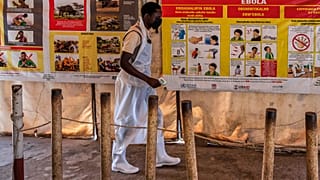
This outbreak has seen fierce resistance from communities in the region, with several treatment centers and healthcare workers themselves having been attacked. The country’s health ministry’s most recent data indicates more than 9,800 cases including more than 4,700 deaths have been recorded since the start of the outbreak in May, making it the deadliest Ebola outbreak in Congo’s history.


Go to video
Nurse killed, health worker injured in DR Congo Ebola attack
02:00
Red Cross trains staff as Kenya records its second death from Ebola
01:55
Nigeria steps up airport health screenings over Ebola fears
01:19
Nigeria's health minister says first Ebola case remains isolated
01:18
WHO: Africa facing 'complex' Ebola outbreak after Nigeria reports first case
01:49
Nigeria can stop Ebola spread, former disease control chief says