



Zimbabwe
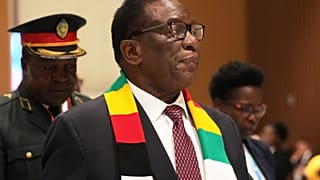
Zimbabwean President Emmerson Mnangagwa has signed into law constitutional changes extending his time in office to 2030. The legislation, approved by Parliament last month, also introduces a provision allowing future presidents to be elected by lawmakers instead of a direct public vote.
President Emmerson Mnangagwa has signed legislation extending his tenure by two years, allowing him to remain in office until 2030.
Government spokesperson Nick Mangwana confirmed the move on Tuesday, announcing on social media that the bill had been "signed, sealed and delivered" after receiving presidential assent.
The legislation was approved by both houses of Parliament last month following backing from the ruling ZANU-PF party and the Cabinet.
Electoral system set for major change
Beyond extending the presidential term, the new law introduces a significant constitutional change by providing for future presidents to be elected by Parliament rather than through a direct popular vote.
The measure marks one of the most far-reaching political reforms in Zimbabwe in recent years and is likely to fuel debate over the country's democratic governance.
Long-running plan becomes reality
Speculation that Mnangagwa intended to remain in office beyond the end of his second and final term first emerged around two years ago.
Supporters at ZANU-PF rallies repeatedly called for the president to be given more time to complete his political and economic agenda, while party leaders later endorsed a constitutional amendment extending presidential terms.
The proposal gained Cabinet approval in February before being passed by Parliament.
Opposition likely to challenge move
The constitutional changes are expected to face strong criticism from opposition parties and civil society groups, which have long accused the government of weakening democratic institutions and concentrating executive power.
For Mnangagwa, however, the new law secures additional time to pursue his administration's priorities while reinforcing ZANU-PF's grip on Zimbabwe's political landscape.

01:08
Media reports allege FIFA knew Congo's Mpasi was ineligible for World Cup
Go to video
A new UN Chief, an old institution and a world in crisis
00:55
Oil prices fall as G7 agrees to release 100 million barrels of reserves
01:26
Netanyahu praises passengers who helped avert disaster on Israel-bound flight
00:50
Rescuers pull migrants from deadly shipwreck off Tunisian Coast
00:51
Morocco's king appoints the country's first-ever female prime minister