



Kenya
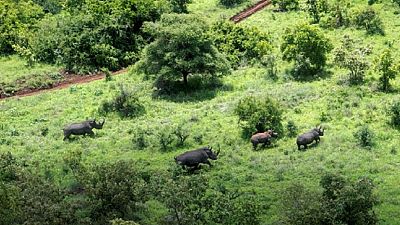
Kenya started marking rhinos on Thursday and aims to tag and identify 22 of them in two weeks at a cost of $600,000, senior government officials said, as part of efforts to conserve their dwindling numbers.
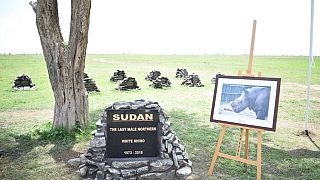
The project comes just weeks after the world’s last male northern white rhino died in Kenya, leaving only two females of its kind alive in the world. Scientists still hope to save the subspecies from extinction using in vitro fertilization.
Kenya had 20,000 rhinos in the 1970s, falling to 400 in the 1990s. It now has 650, almost all of them black rhinos.
Kenya Wildlife Service and the Ministry of Tourism started marking the rhinos in Meru National Park, the area of which is being increased to 83 square km from 45 square km previously.
The numbers of rhinos in the park have risen to 104 from 90 previously. Of those, 72 are southern white rhinos and 32 are black.
“Ear notches are permanent markings and you can use them for the life of the animal,” Francis Gakuya, head of veterinary services at KWS, told Reuters.
“They are permanent. The horn transmitters that we usually put on animals have a shelf life of three years, then the battery goes down, so after that you are not able to track the animal unless immobilized and you do it again.”
Thousands of southern white rhinos still roam sub-Saharan Africa, but decades of rampant poaching have almost wiped out northern whites.
Poachers were able to sell northern white rhino horns for $50,000 per kilo, making them more valuable than gold.
REUTERS






01:10
World Rhino Day: Less than 27,000 of the giant animals remain in the wild
00:51
Madagascar tourist arrivals grow despite instability
00:54
Teleperformance Kenya faces allegations over workers’ rights
02:01
Kenya: Health workers increasingly concerned in wake of USAID cuts
01:45
Kenyans weigh AI's promise and risks as technology transforms jobs
01:15
Nairobi to host the 2029 World Athletics Championships